
Last updated September 10, 2026
Level 1 sweep and inspection to the NFPA 211 annual standard - flue, crown, cap, and flashing checked and photographed
Chimney sweep logs do not sweep chimneys. They loosen some creosote - which then falls where a brush and vacuum still have to collect it.
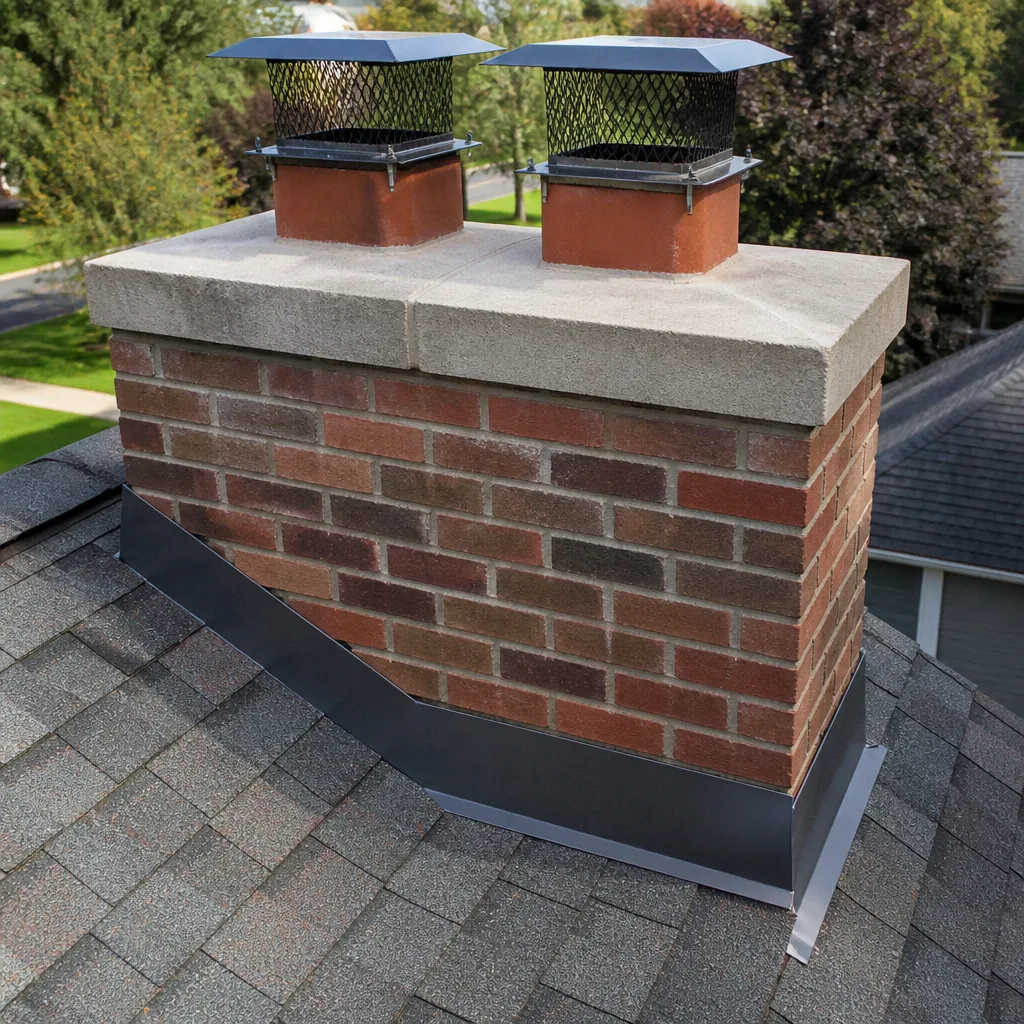
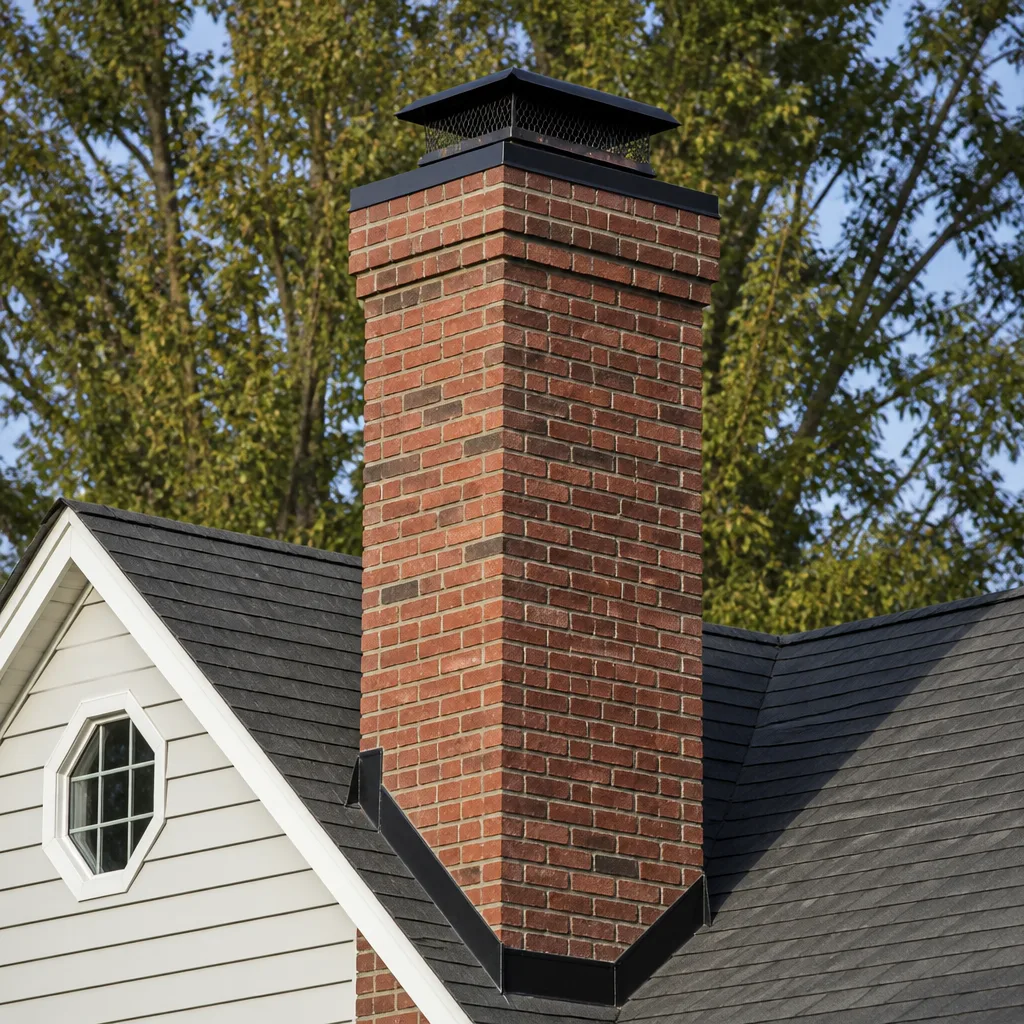
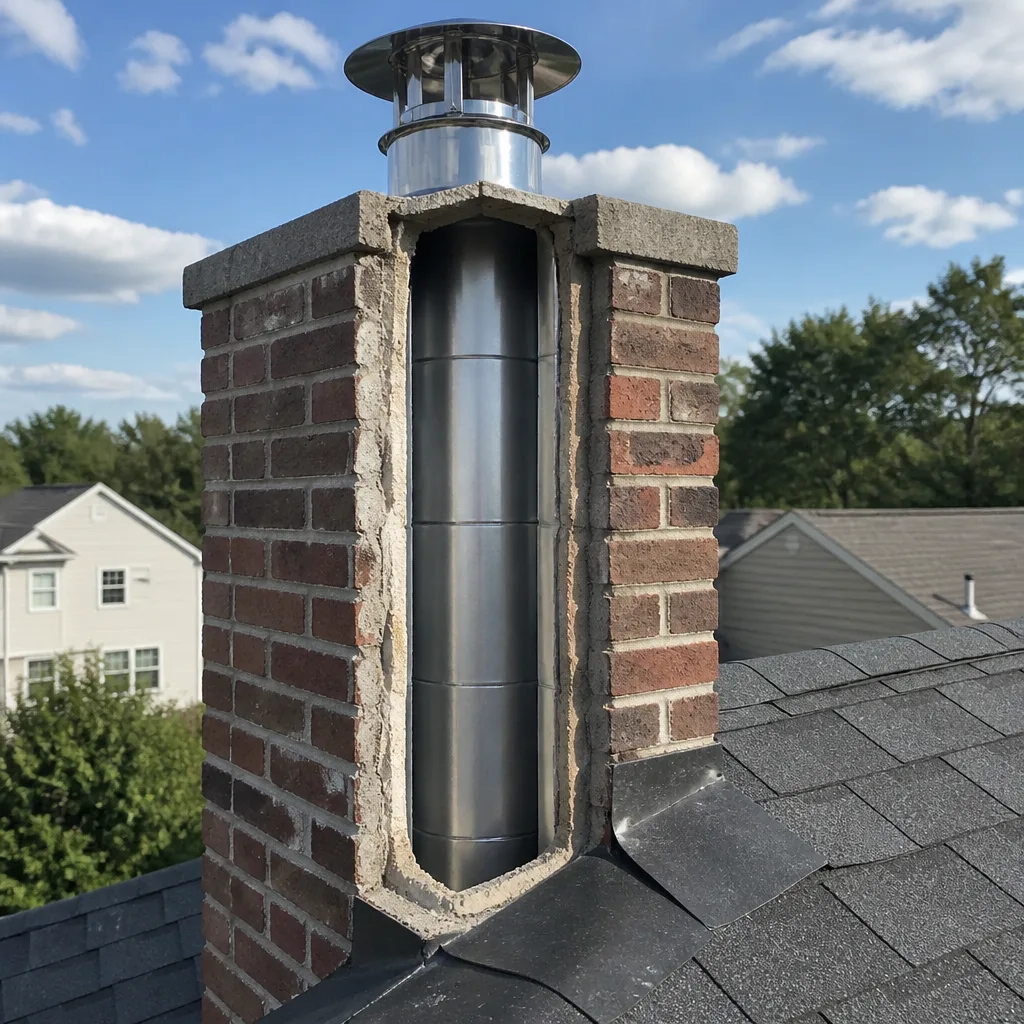
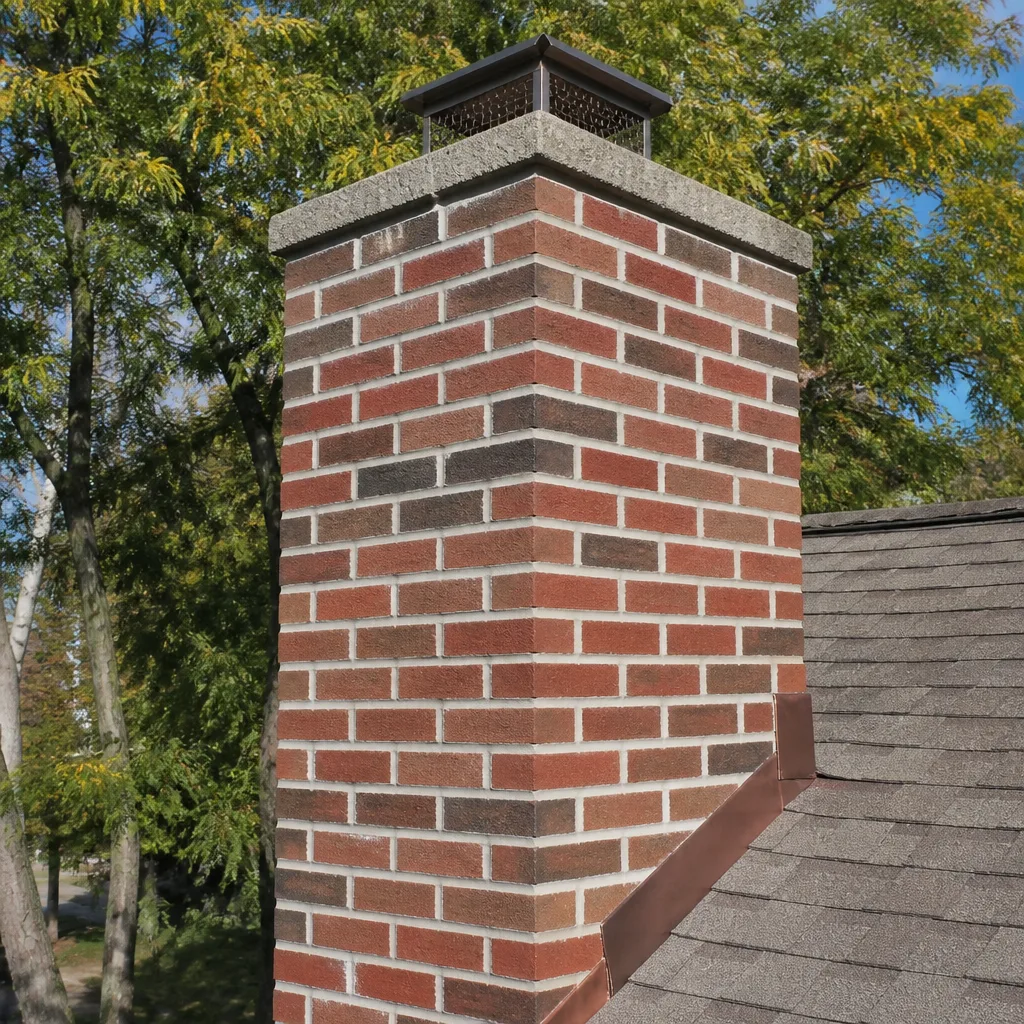
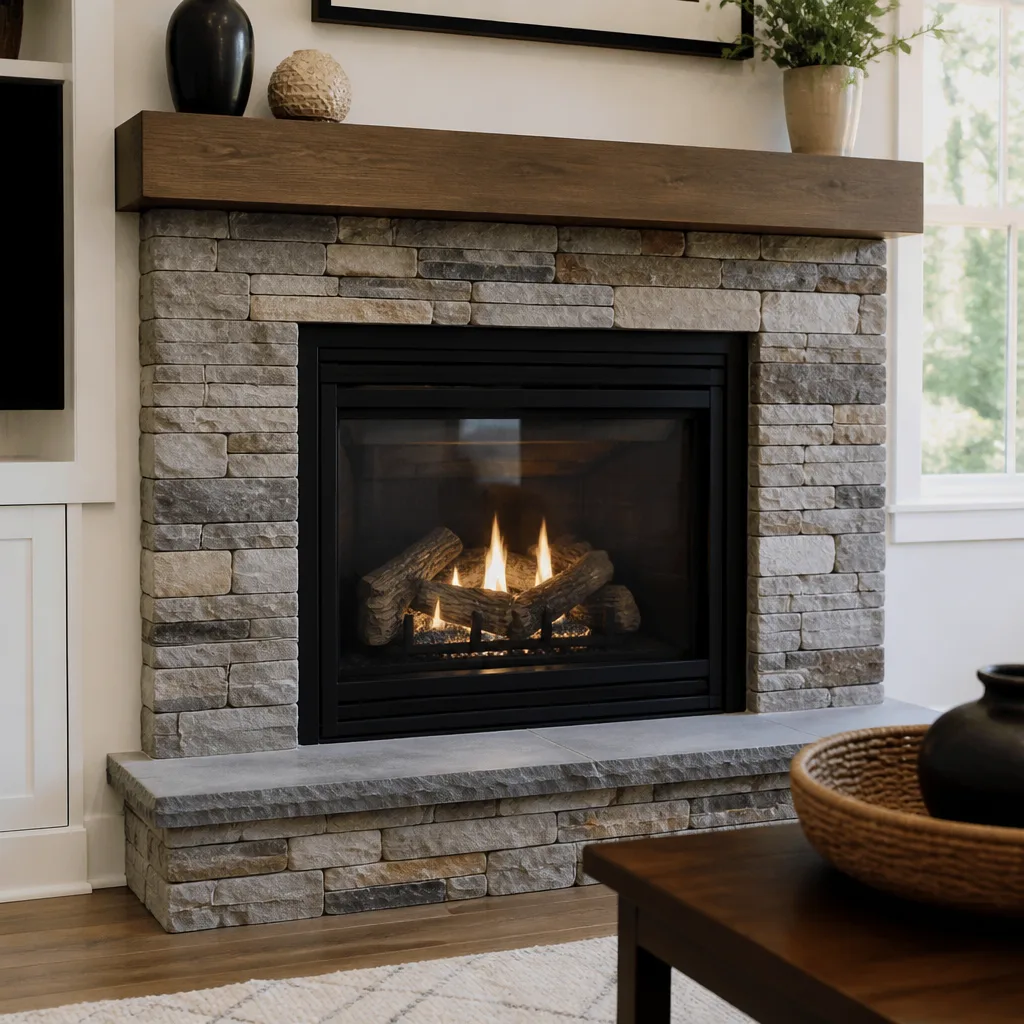
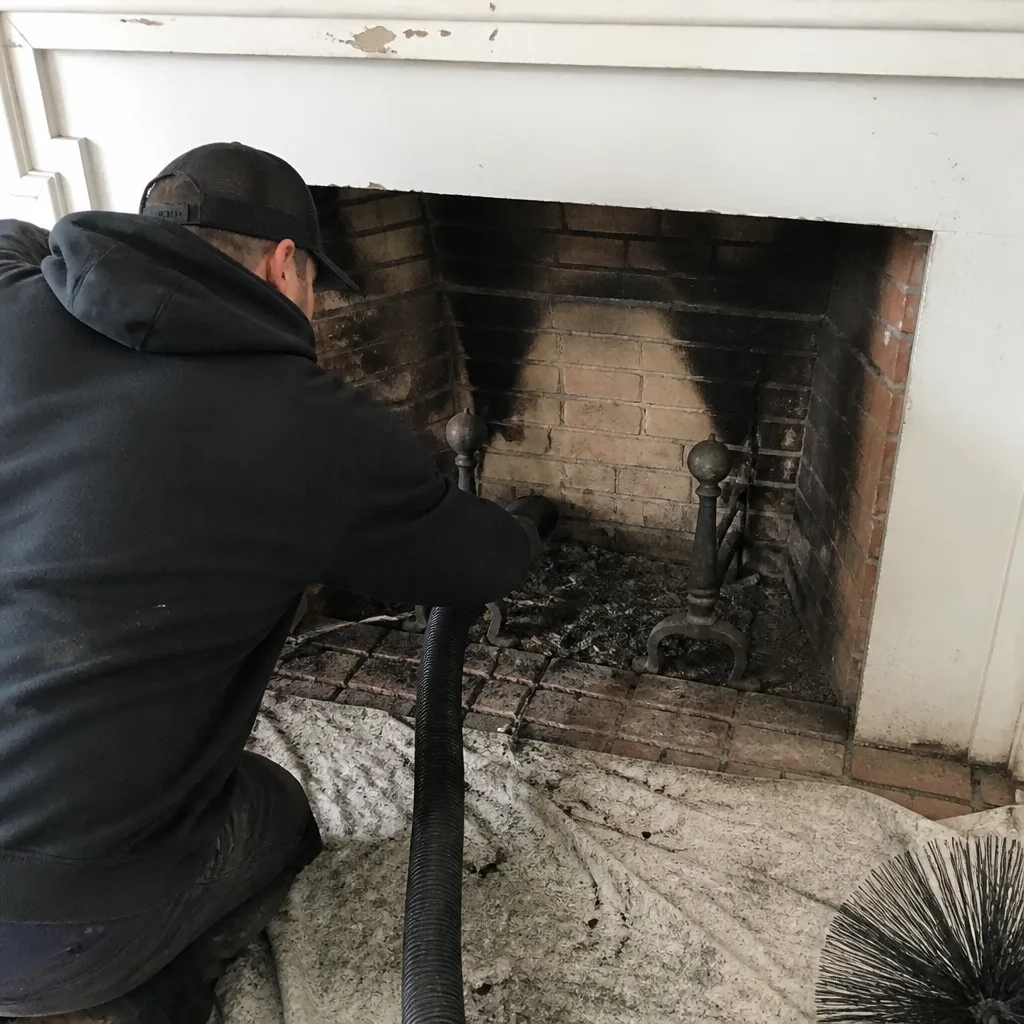 Before
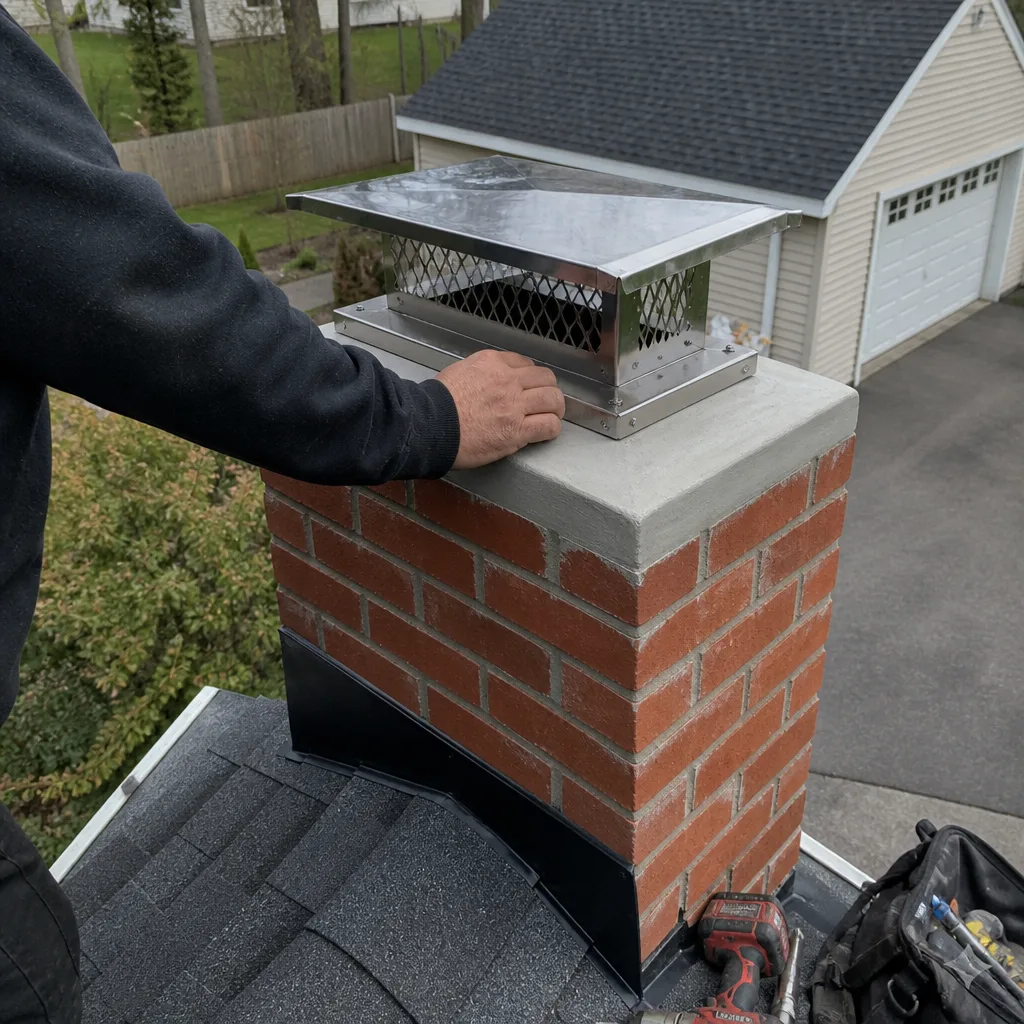 After
After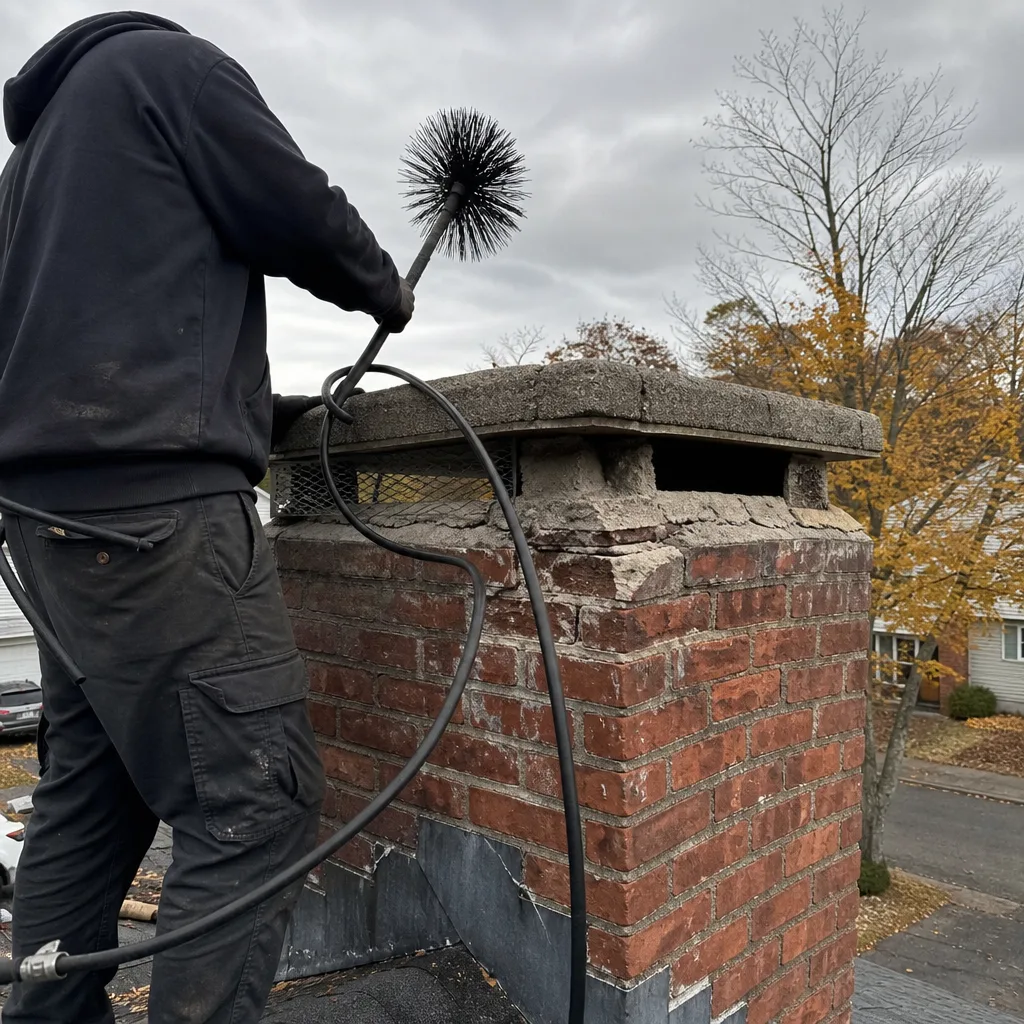 Before
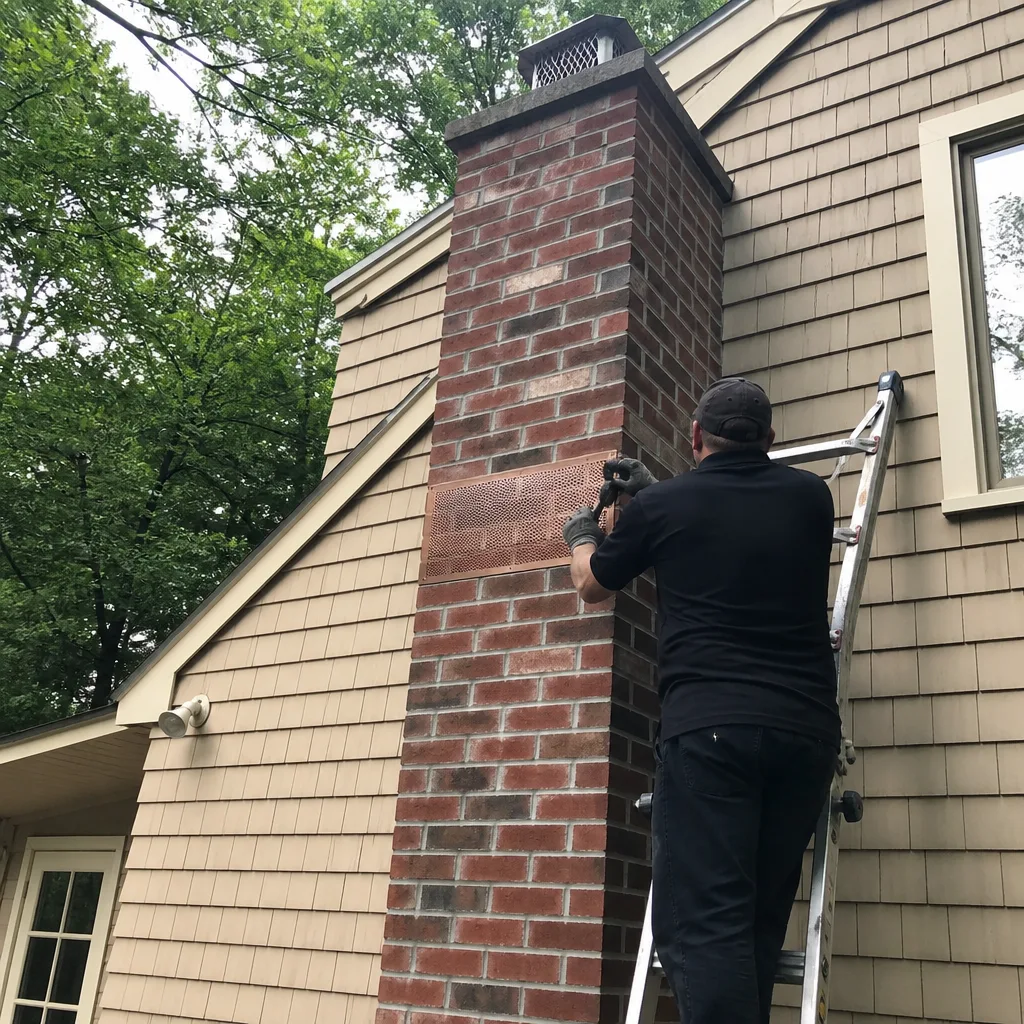 After
After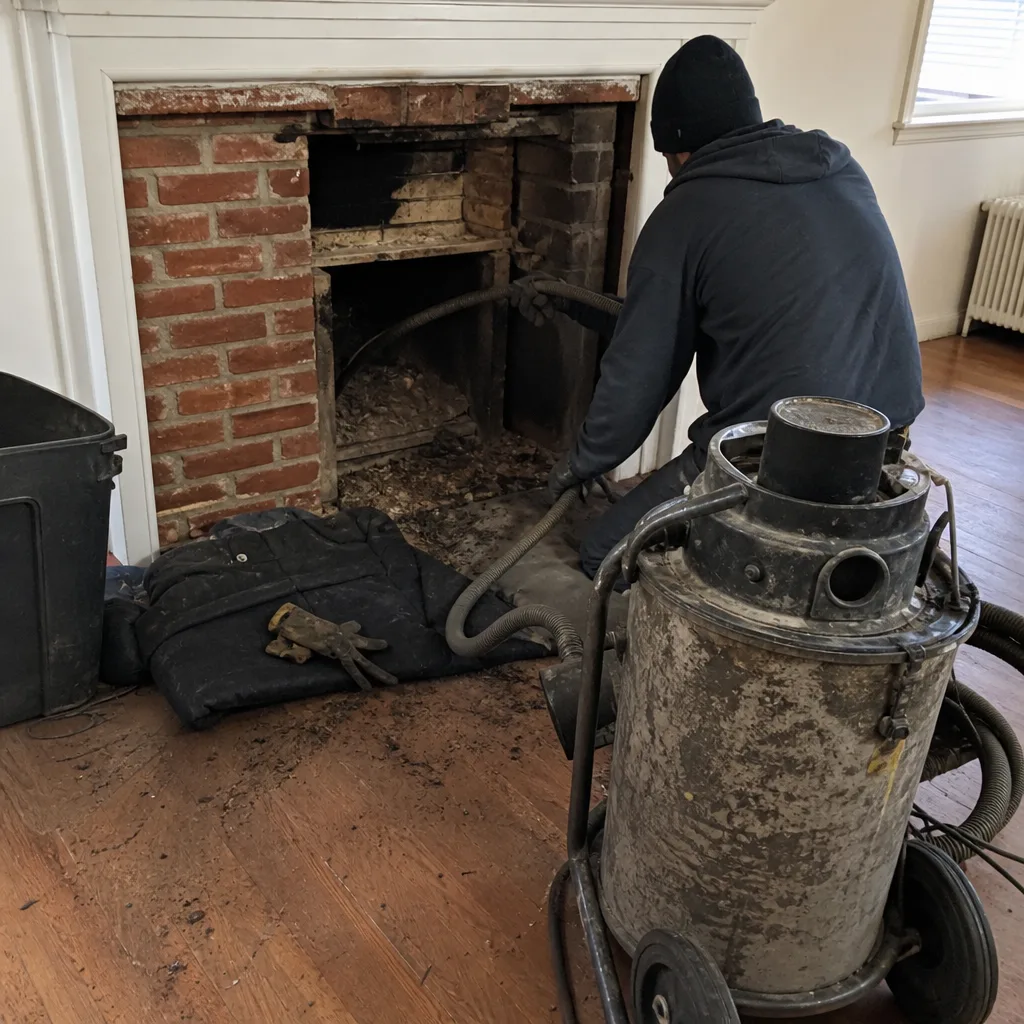 Before
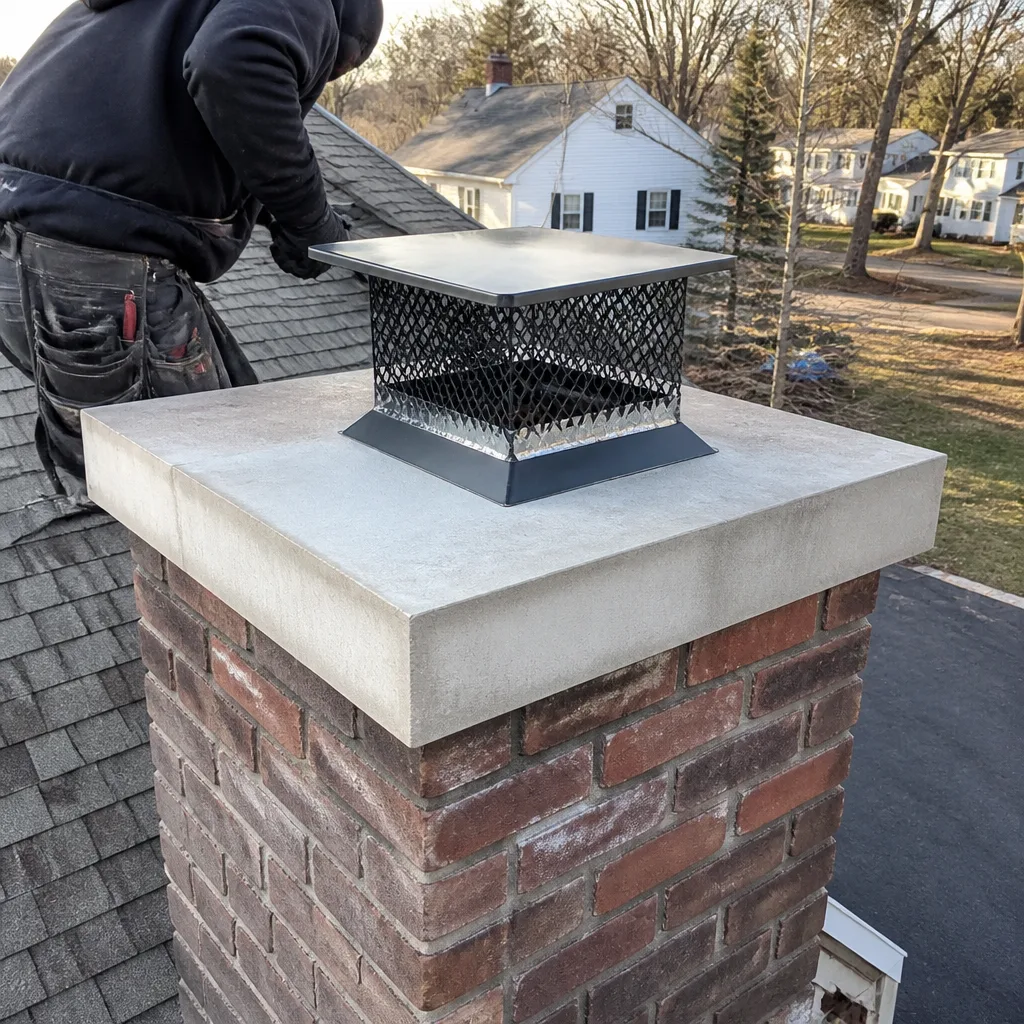 After
AfterChimney Cleaning Warning Signs: A Woburn Homeowner’s Reference Guide
A white haze on the brick face of your chimney is not a cosmetic issue - it’s called efflorescence, and it means water is moving through your masonry and carrying mineral salts with it. The staining is the least of your problems. In Woburn, where freeze-thaw cycles can run from October through April, that same water expands inside your brickwork and turns a maintenance issue into a structural repair. Most chimney warning signs are subtle enough that homeowners rationalize them for an entire heating season before something forces the issue. This guide names those signals precisely, explains the mechanism behind each one, and tells you which ones mean stop using the fireplace now versus schedule a cleaning soon.
Quick Answer
The seven critical chimney warning signs visible from the ground are spalling brick, efflorescence, mortar joint gaps, rusted cap, flashing separation, white staining on the crown, and damaged chase covers. Inside your home, watch for fireplace odors in summer, smoke rollout on startup, and black staining above the firebox opening. Some signs indicate you need a cleaning; others indicate structural damage that cleaning will reveal but cannot fix. Gas inserts and zero-clearance fireplaces show different warning signs - pilot outages, burner discoloration, and carbon deposits at the glass - that homeowners often misattribute to appliance problems rather than chimney issues.
Table of Contents
- The Seven Visual Warning Signs You Can Spot from the Ground
- Inside-the-House Signals Homeowners Routinely Misattribute
- Cleaning Will Fix This vs. Cleaning Will Reveal a Repair
- Warning Signs Specific to Gas Inserts and Zero-Clearance Fireplaces
- The Triage Matrix: Stop, Inspect, or Schedule Cleaning
- How Woburn’s Climate and Housing Stock Affect Your Chimney
- Common Mistakes to Avoid
- When to Call a Professional
- Frequently Asked Questions
The Seven Visual Warning Signs You Can Spot from the Ground
You do not need a ladder or a camera to catch most chimney problems early. These seven signs are visible from your driveway, your yard, or a second-story window. Each one tells a specific story about what is happening inside or on top of your chimney.
1. Spalling Brick
Spalling is when the face of a brick flakes off, leaving a rough, pitted surface that looks like someone took a cheese grater to it. In Woburn, we see this most often on chimneys built before 1980 with softer, porous brick that absorbs moisture during rain or snowmelt. When temperatures drop below freezing, that water expands by about 9% and pushes off the brick face. Once the protective outer layer is gone, the freeze-thaw cycle accelerates. A single spalled brick is not an emergency. A chimney with spalling across multiple courses needs inspection before the next heating season. We documented a case in the Montvale area where spalling had progressed so far that the wythe - the inner wall of the chimney - was exposed to direct weather. That chimney needed a partial rebuild.
2. Efflorescence
That white, powdery haze we opened with is soluble salts being carried to the surface by water moving through the masonry. It means water is getting in somewhere: a failed crown, deteriorated mortar joints, or porous brick. The salts themselves are not structural damage, but they are proof of a water management failure. In Woburn’s older neighborhoods like South Wilmington and the Central Street corridor, we see efflorescence on chimneys where the original lime mortar has eroded and modern Portland cement repointing was done too hard, trapping moisture inside. The chimney looks fine from a distance. Up close, the chemistry is working against it.
3. Mortar Joint Gaps
Recessed or missing mortar between bricks creates a channel for water to enter. A mortar joint should be flush or slightly recessed, never more than a quarter-inch back from the brick face. Gaps wider than that collect water, leaves, and ice. We find that chimneys in Woburn with southern exposure degrade faster - the daily freeze-thaw cycle is more aggressive when sun warms the brick during the day and temperatures drop at night. Repointing with proper mortar matching is the fix, not caulk or surface sealers.
4. Rusted Cap or Damper
A rusted cap means the galvanized steel or aluminum has failed, or more commonly, that acidic flue gases have condensed on the metal surface and accelerated corrosion. This is particularly common with gas appliances, where flue temperatures are lower and condensation is more likely. A rusted damper is harder to spot from outside, but if your damper is stuck or grinds when you operate it, corrosion is the likely cause. In either case, rust means metal is thinning. A cap with holes lets in rain, animals, and debris. A damper that won’t close costs you heated air all winter.
5. Flashing Separation
The metal where your chimney meets the roof should lie flat and tight. If you see gaps, lifted edges, or caulk that has pulled away, water is getting into the roof deck and the framing around your chimney. This is not a chimney sweep issue - it is a roofer or chimney repair issue - but it affects your chimney’s structural integrity. In Woburn, ice dams in valleys and at chimney penetrations are common, and they pry flashing loose over multiple winters. We coordinate with roofing contractors on these jobs because the repair requires both trades to do it right.
6. White Staining on the Crown
The concrete cap at the top of your chimney is called the crown. It should have a slight slope to shed water and an overhang that drips clear of the brick below. White staining on the crown surface means water is pooling and evaporating, leaving mineral deposits. Eventually that water finds cracks, freezes, and splits the crown. A cracked crown funnels water directly into the flue and onto the smoke shelf. We replace failed crowns with poured concrete or pre-formed crowns from Olympia Chimney, sloped and overhung correctly.
7. Damaged Chase Covers
Factory-built fireplaces have a metal chase that encloses the flue, topped with a chase cover. These are often galvanized steel that rusts through in 15-20 years. A damaged chase cover sags, pools water, and leaks directly into the chase framing. We replace these with stainless steel or copper chase covers from Gelco, fabricated to fit the specific chase dimensions. A rusted chase cover on a factory-built fireplace is one of the most common sources of water damage we find in Woburn’s 1970s and 1980s housing stock.
Inside-the-House Signals Homeowners Routinely Misattribute
The signs inside your home are often more subtle than the ones outside, and easier to explain away. Here are three we see misdiagnosed constantly.
Fireplace Odors in Summer
That musty, smoky smell from your fireplace in July is not leftover ash. It is negative pressure in your house pulling air down the flue. Modern homes are tighter than they used to be. Bathroom fans, range hoods, and attic ventilation create suction that overcomes the natural draft of a cool chimney. The air coming down carries creosote odors and, in some cases, flue gases if your appliance is running. The solution is not air freshener. It is identifying the pressure imbalance and ensuring your chimney has adequate height and clearance to draft properly. A professional chimney cleaning in Woburn removes the creosote that causes the odor, but the pressure issue may need a top-sealing damper or makeup air solution.
Smoke Rollout on Startup
Smoke that puffs into your room when you first light a fire is usually one of three things: a cold flue that needs pre-warming, an obstruction like a bird nest or excessive creosote buildup, or a house so tight that the fire cannot establish draft before smoke escapes. In Woburn’s ranch-style homes with central chimneys, we see this when the chimney is on the warm side of the house and the outdoor temperature is mild - the temperature differential that drives draft is too small. The homeowner opens a window slightly and the problem disappears, but that is a workaround, not a fix. A proper inspection determines whether the flue is sized correctly for the appliance and whether an obstruction is present.
Black Staining Above the Firebox Opening
A sooty black arch on the brick or stone above your fireplace opening means smoke is escaping the firebox regularly. This can be improper combustion (wet wood, insufficient air), a damper that is not fully open, or a fireplace opening that is too large for the flue. The ratio matters: a flue that is too small for the fireplace opening cannot handle the volume of smoke. We measure both during a Level-2 inspection and can correct the ratio with a smoke guard or flue extension. The black staining itself is cosmetic, but the condition that causes it is not.
Cleaning Will Fix This vs. Cleaning Will Reveal a Repair
Not every warning sign is solved by sweeping. Some are revealed by sweeping. Knowing the difference saves you from expecting a $300 cleaning to fix a $3,000 problem.
What Cleaning Actually Does
A chimney sweep removes combustible deposits - creosote, soot, and debris - from the flue, smoke chamber, and firebox. It improves draft, reduces fire risk, and allows proper inspection. It does not seal cracks, rebuild masonry, replace liners, or correct structural problems. We use professional-grade brushes and vacuums, and our sweeps include a basic visual inspection. But the sweep is maintenance, not repair.
Signs That Cleaning Will Fix
- Reduced draft or smoky fires caused by creosote buildup
- Musty odors from accumulated soot and debris
- Slow startup due to partial obstruction at the flue top
- Minor smoke spillage from a dirty smoke chamber
Signs That Cleaning Will Reveal a Repair
- Spalling brick or missing mortar that becomes visible once soot is removed
- Cracked flue tiles found during the post-sweep inspection
- Water staining inside the firebox that indicates crown or flashing failure
- Corroded metal components that were hidden by ash and creosote
- Smoke chamber gaps or corbelled construction that does not meet modern code
We explain this before we start. Our chimney repair services in Woburn are available when cleaning reveals something that needs fixing, and we provide photos and a plain-English verdict before any repair work is authorized. Nothing is recommended without camera evidence you can see for yourself.
Warning Signs Specific to Gas Inserts and Zero-Clearance Fireplaces
Gas fireplaces and zero-clearance units have different failure modes than traditional masonry, and homeowners often miss them because the signs look like appliance problems rather than chimney problems.
Pilot Outages
A pilot light that goes out repeatedly can indicate draft problems in the chimney or vent system. If exhaust gases are not venting properly, the pilot can be starved of oxygen or overwhelmed by backdraft. In Woburn, we see this in homes where a new high-efficiency furnace has been installed and the shared chimney is now oversized for the reduced exhaust volume. The chimney stays too cold, condensation forms, and draft becomes unstable. The fix is often a properly sized liner or a dedicated vent system, not a new pilot assembly.
Burner Discoloration
Gas flames should be blue with minimal yellow tipping. A burner that shows yellow or orange flames, or soot deposits on the logs or glass, is burning incompletely. This produces carbon monoxide and can indicate blocked combustion air intake, a restricted vent, or incorrect gas pressure. The chimney or vent system is part of this diagnosis. A vent with a bird nest, ice blockage, or improper termination will cause burner discoloration even if the appliance itself is fine.
Carbon Deposits at the Glass
Black carbon buildup on the inside of the glass door means incomplete combustion. It is not normal. It is not “just how gas fireplaces are.” It is a warning that the fuel-air mixture or venting is wrong. Left uncorrected, it produces carbon monoxide and can damage the appliance. During our inspections, we check vent termination height, clearance to obstructions, and liner condition for gas appliances - the same attention we give to wood-burning systems.
Moisture in the Firebox or on Glass
Condensation inside a gas fireplace during the off-season indicates a venting problem. The chimney or vent is allowing humid outside air to enter and condense on cool surfaces. This corrodes metal components and deteriorates refractory panels. We see this in Woburn’s coastal-influenced climate, where summer humidity is high and chimneys without proper caps or with failed dampers become conduits for moist air.
The Triage Matrix: Stop, Inspect, or Schedule Cleaning
Here is how we classify warning signs when a homeowner calls. This is not a substitute for professional evaluation, but it will help you communicate urgency accurately.
| Warning Sign | Verdict | Reasoning |
|---|---|---|
| Spalling brick (1-2 bricks) | Schedule inspection before next use | Water intrusion confirmed; repair timing depends on extent |
| Spalling brick (widespread) | Stop using and call today | Structural integrity compromised; risk of collapse or liner damage |
| Efflorescence | Schedule inspection before next use | Water source must be identified; may be crown, flashing, or mortar |
| Mortar joint gaps | Schedule inspection before next use | Repointing needed; can wait for scheduled appointment if no active leak |
| Rusted cap or damper | Schedule cleaning and inspection | Replace cap/damper; continued use risks water and animal entry |
| Flashing separation | Stop using and call today | Water entering roof structure; fire risk if framing is wet |
| White staining on crown | Schedule inspection before next use | Crown repair or replacement needed; water entering flue |
| Damaged chase cover | Schedule inspection before next use | Water entering chase framing; rust accelerating |
| Fireplace odors in summer | Schedule cleaning | Creosote removal plus pressure diagnosis |
| Smoke rollout on startup | Stop using and call today | Obstruction or draft failure risks CO exposure |
| Black staining above firebox | Schedule cleaning and inspection | Determine if ratio correction or operational change needed |
| Gas pilot outages | Stop using and call today | CO risk from incomplete combustion or backdraft |
| Gas burner discoloration | Stop using and call today | CO production; vent or combustion air problem |
| Carbon deposits on gas glass | Schedule inspection before next use | Incomplete combustion; venting or appliance adjustment needed |
How Woburn’s Climate and Housing Stock Affect Your Chimney
Woburn sits in a transition zone between coastal and inland Massachusetts climate patterns. We get more freeze-thaw cycles than the Cape, more snow load than Boston proper, and the kind of wet, heavy snow that packs into chimney caps and melts slowly. The city building stock is varied: 18th and 19th century colonials and Greek Revivals in the center, mid-century ranches and Capes in the postwar developments, and 1970s-1980s split-levels with factory-built fireplaces in neighborhoods like North Woburn and the area around Horn Pond.
Each era has typical chimney problems. The older masonry chimneys were built with lime mortar that needs compatible repointing - hard Portland cement traps water and accelerates deterioration. The mid-century chimneys often have clay flue tiles that have cracked from thermal shock after decades of use. The factory-built fireplaces from the 1970s and 1980s are reaching end of life for their original chase covers and termination caps.
Woburn’s proximity to Route 128 and I-93 also means many homeowners commute and use their fireplaces evenings and weekends only. Intermittent use is actually harder on chimneys than daily use because the flue never fully warms and dries, promoting condensation and creosote buildup. If you light fires Friday through Sunday and let the chimney cool all week, you are in the pattern we see most often for accelerated creosote accumulation.
The city requires permits for chimney repairs involving structural work, and Woburn’s building department enforces the Massachusetts State Building Code with amendments. We pull permits when required and coordinate inspections. Most chimney sweeps do not require permitting, but any liner installation, crown rebuild, or structural repair does.
Common Mistakes to Avoid
- Assuming a gas fireplace needs no chimney maintenance. Gas appliances produce corrosive condensation and require annual inspection of the vent system. The chimney does not “clean itself” because the fuel is clean-burning.
- Using the fireplace when the damper is stuck open “just this once.” A stuck open damper costs you hundreds in heated air over a winter and indicates corrosion or creosote buildup that needs addressing. Do not wait for it to seize completely.
- Applying waterproofing sealers to the exterior brick without diagnosing the water source. Sealers trap water inside and accelerate spalling. The water source - crown, flashing, mortar, or porous brick - must be identified first.
- Hiring a sweep who does not use a camera or provide photos. You cannot evaluate a flue liner or smoke chamber by flashlight alone. Our Level-2 inspections include camera documentation and a plain-English verdict. Photos you can see, a plain-English verdict.
- Ignoring summer odors because “the fireplace isn’t in use.” Summer odors indicate negative pressure and potential backdrafting of combustion gases from any appliance sharing the chimney or house air. It is a year-round safety issue.
- Waiting for “the fall rush” to schedule cleaning. In Woburn, sweep schedules fill by October. A chimney that needs repair found in September can be fixed before burning season. The same repair found in November means weeks of delay or a cold house.
- Assuming all sweeps are the same. Massachusetts does not license chimney sweeps. Certification through CSIA or FIRE is voluntary. We are certified, background-checked, uniformed, and our work is covered by the 90-Day Done Right Promise - in writing, no arguing.
When to Call a Professional
Call when you see any sign in the “stop using and call today” category above. Call before burning season if your chimney has not been inspected in over a year. Call if you have changed appliances, added a stove insert, or noticed any change in performance - draft, odor, smoke, or pilot behavior. Call if you are buying a home and the inspection report notes the chimney as a question mark; we provide second opinions on written estimates at no charge.
Hearthstone Chimney Co. offers free estimates in Woburn. A live person answers every call, 24 hours a day, 7 days a week - not a voicemail, not a callback queue. Our technicians are background-checked and uniformed, and most jobs are completed in a single visit with no-hassle upfront pricing. The number on the estimate is the number on the invoice. Call (781) 404-3793 to schedule.
Frequently Asked Questions
A standard chimney cleaning and inspection in Woburn typically ranges from $250 to $400, depending on accessibility, the amount of creosote buildup, and whether a Level-2 camera inspection is needed. Our $89 Seasonal Tune-Up is available for qualifying systems during off-peak months. Call (781) 404-3793 for an exact quote - estimates are free.
You need a new liner if your existing liner is cracked, deteriorated, or improperly sized for your appliance - and only if camera inspection confirms the damage. We have seen liners that looked questionable from the firebox but were sound throughout the flue, and we have seen liners that appeared fine until the camera found a gap at the shoulder. Nothing is recommended without photo evidence you can see for yourself. In some cases, a stainless steel liner from DuraFlex is the right solution; in others, a HeatShield cerfractory seal can restore a clay tile flue without full replacement.
The National Fire Protection Association recommends annual inspection, with cleaning as needed based on deposit accumulation. For wood-burning fireplaces used regularly during Woburn’s heating season, that typically means annual sweeping. For gas appliances, annual inspection is still recommended even though creosote is not produced. Occasional users - weekend fires only - may not need sweeping every year but still need inspection to check for animal intrusion, water damage, or deterioration.
Skipped maintenance leads to creosote buildup, which increases fire risk and reduces draft. It leads to undetected water damage that progresses from mortar erosion to structural failure. It leads to carbon monoxide hazards from blocked or damaged flues. And it leads to more expensive repairs, because small problems found early stay small. A cracked crown repaired for hundreds becomes a chimney rebuild costing thousands when water has destroyed the masonry below. Call (781) 404-3793 to schedule before small problems become large ones - estimates are free.
Negative pressure in your house pulls air down the flue when the chimney is cooler than the outdoor air, which happens frequently in summer. The air carries creosote odors and can carry combustion gases from other appliances. Winter odors are less noticeable because the chimney is warm and drafting upward. The solution is not masking the smell; it is identifying the pressure imbalance and removing the creosote source. A top-sealing damper or improved makeup air may be part of the solution.
It depends on which cracks and where. Hairline cracks in the firebox brick are common from thermal cycling and may not be urgent. Cracks in the exterior masonry, especially vertical cracks that follow mortar joints or stair-step through brick, indicate structural movement or freeze-thaw damage and need inspection before use. Cracks in the flue tiles are never acceptable - they allow heat and gases to escape into the chimney structure and adjacent framing. When in doubt, stop using and call for inspection. The cost of an inspection is negligible compared to the risk of a chimney fire or CO exposure.
The Bottom Line
Chimney warning signs are subtle by design - the masonry and metal components fail slowly until they fail suddenly. The seven visual signs from the ground, the three interior signals homeowners misattribute, and the gas-specific warnings we have outlined here give you a framework for observation. The triage matrix tells you when to stop, when to inspect, and when to schedule routine cleaning. Woburn’s climate and housing stock create specific vulnerabilities: freeze-thaw damage in older masonry, end-of-life components in 1970s-1980s factory-built units, and negative pressure issues in tighter modern homes. The common thread is that early identification through annual inspection prevents the emergencies that force costly repairs. A chimney that is cleaned, inspected, and repaired when needed will outlast your ownership of the house. For detailed maintenance advice, see The Complete Guide to Chimney Cleaning in Woburn. Done right - and we stand behind it.
Written by Russell Haines, Owner at Hearthstone Chimney Co., serving Woburn since 2014. Browse more guides & resources from our team.