
Last updated September 10, 2026
Level 1 sweep and inspection to the NFPA 211 annual standard - flue, crown, cap, and flashing checked and photographed
Chimney sweep logs do not sweep chimneys. They loosen some creosote - which then falls where a brush and vacuum still have to collect it.
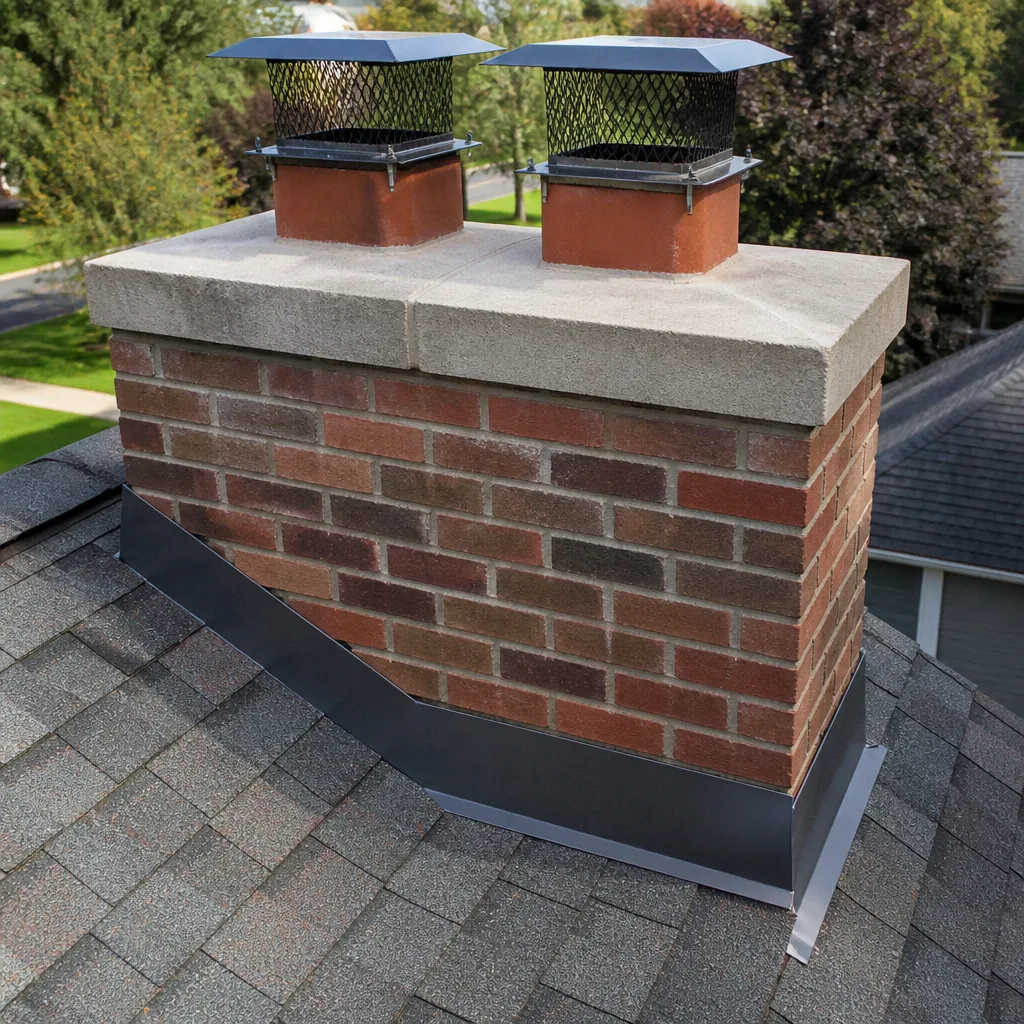
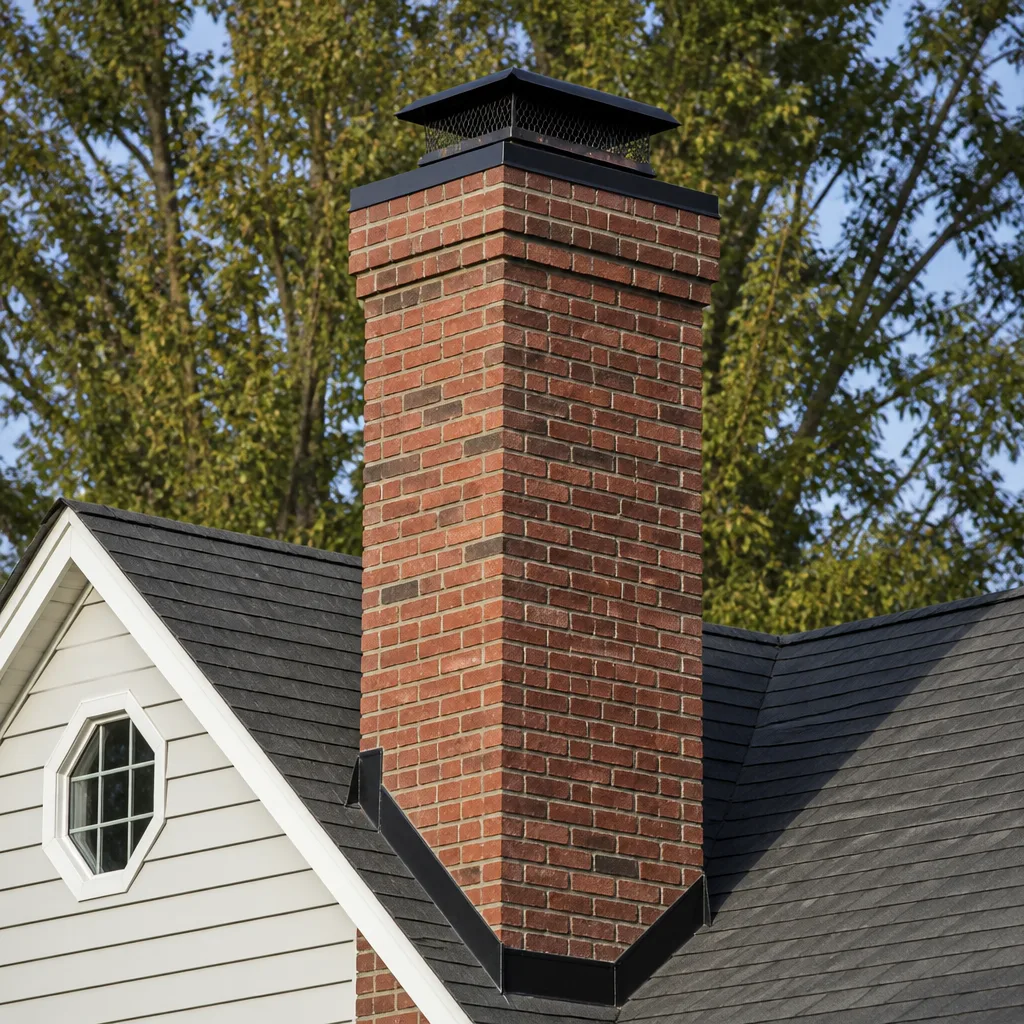
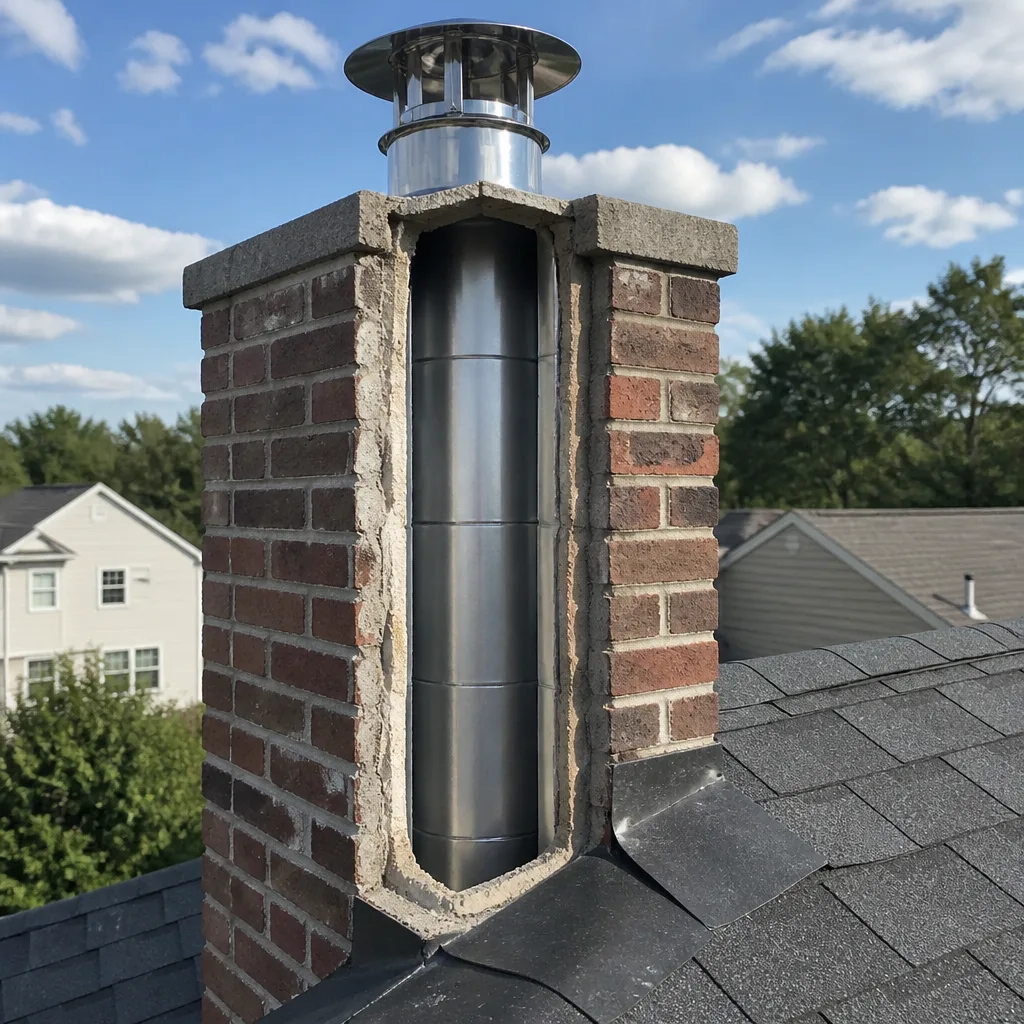
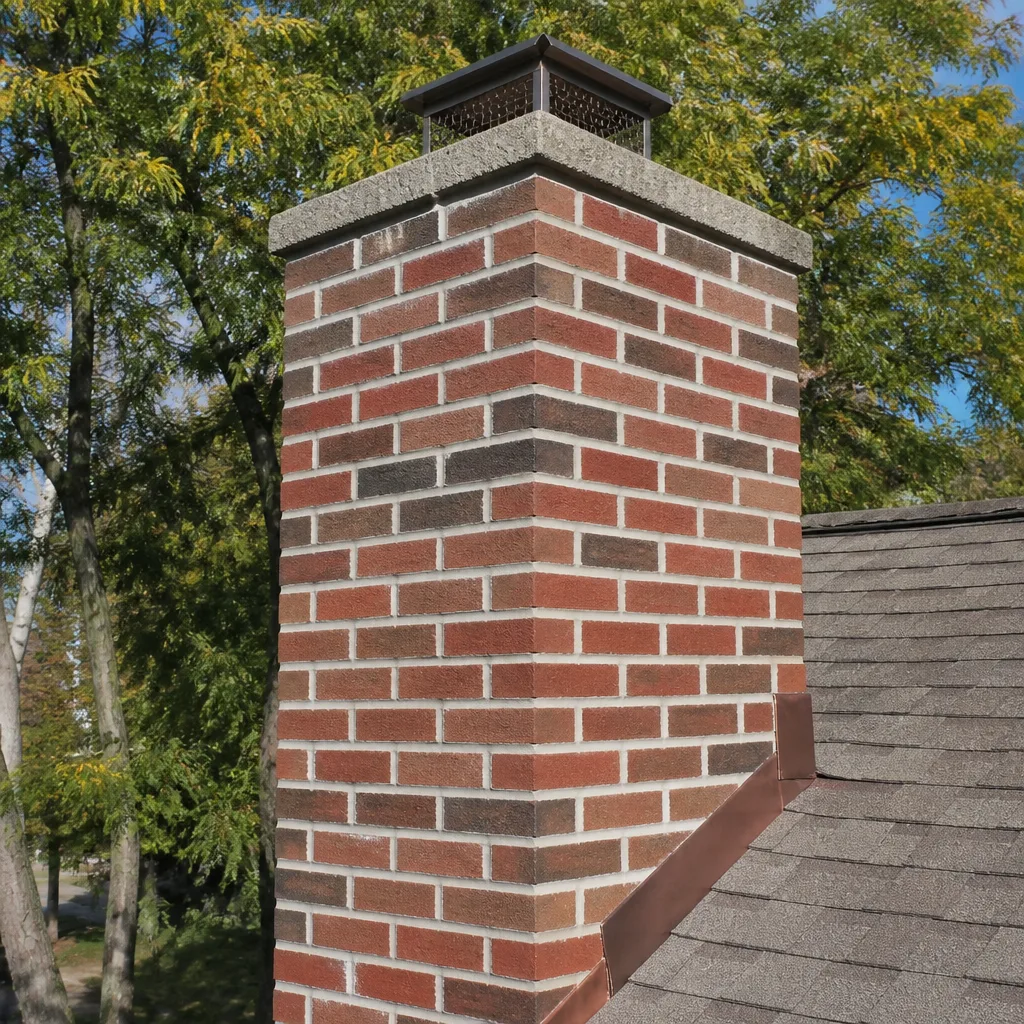
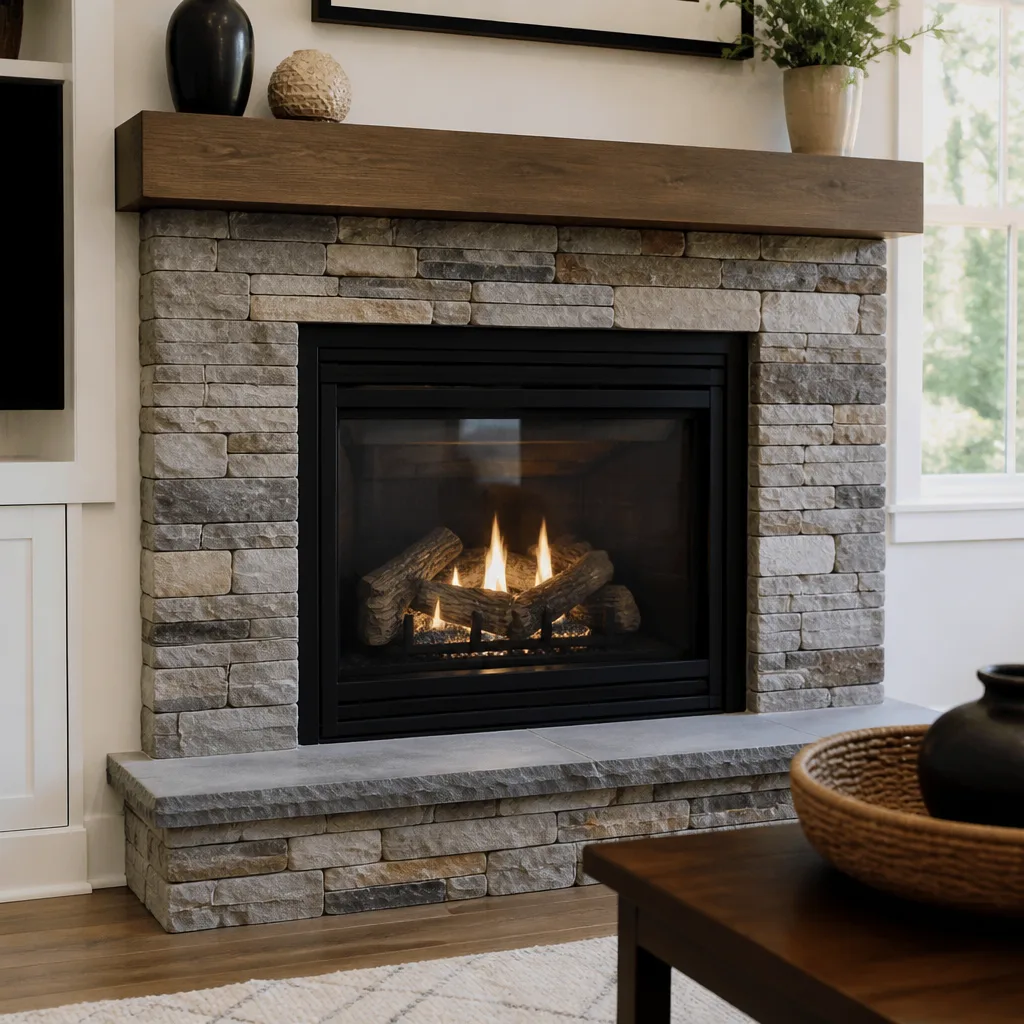
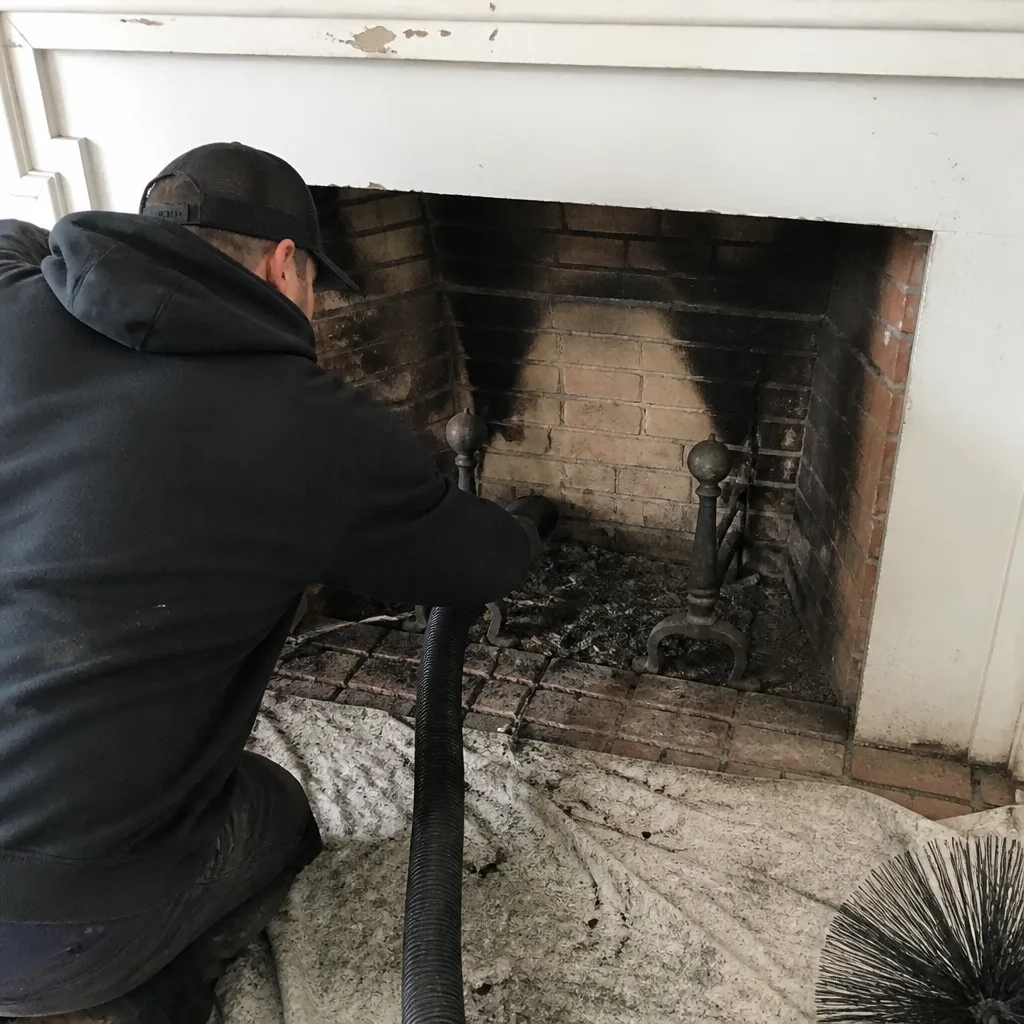 Before
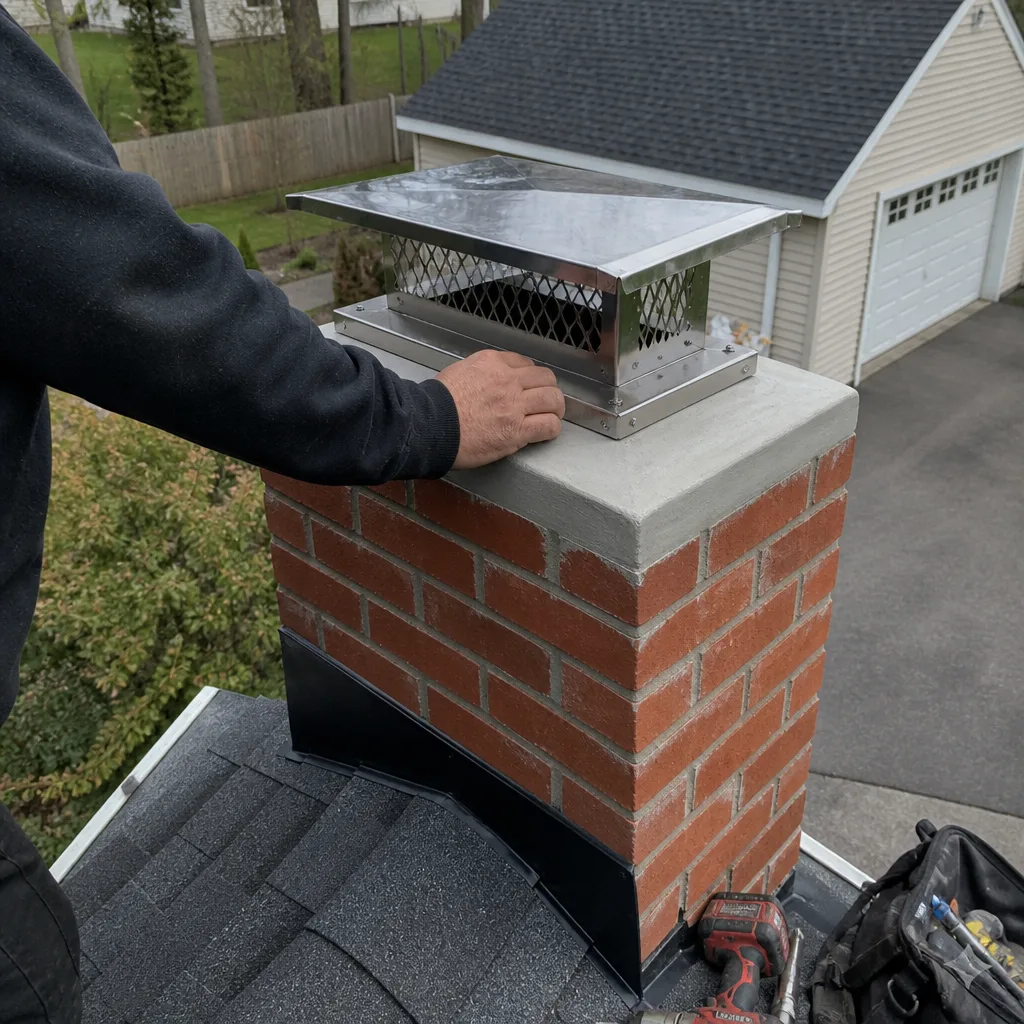 After
After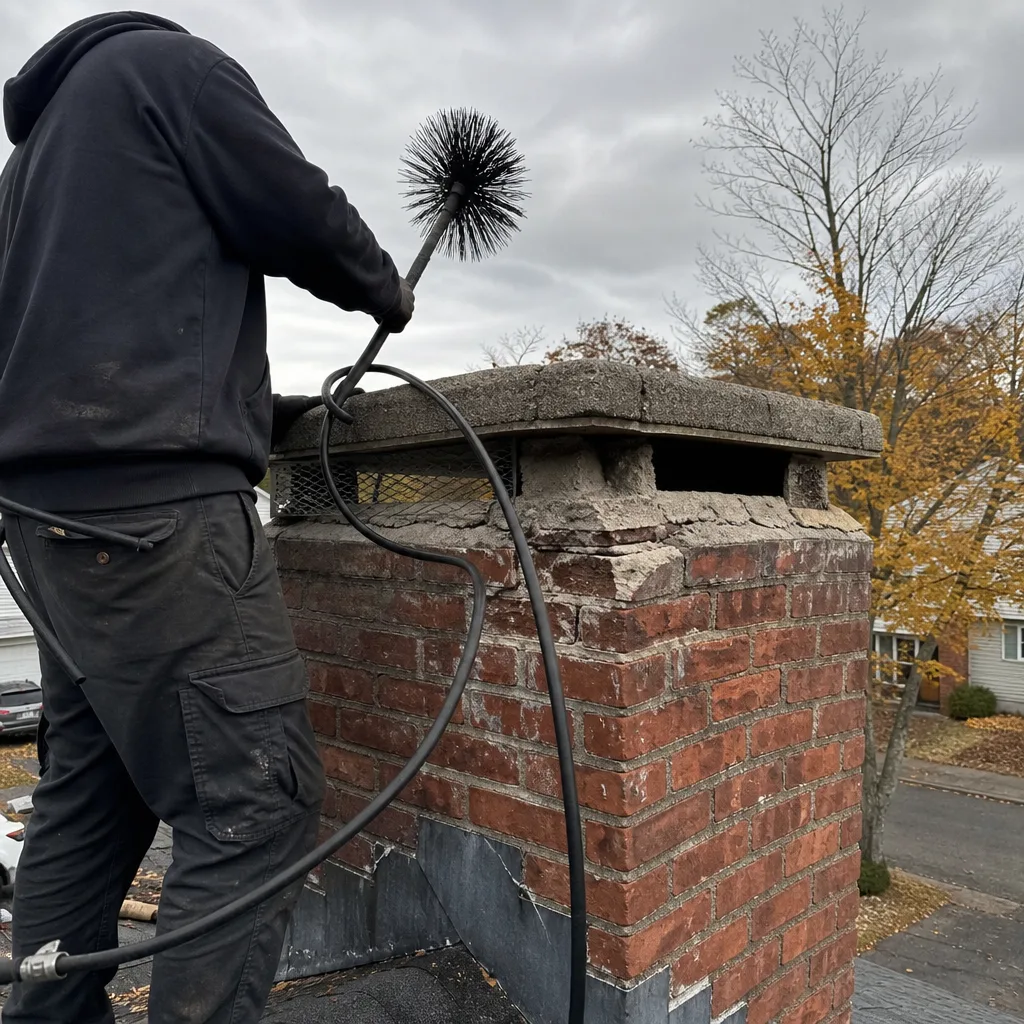 Before
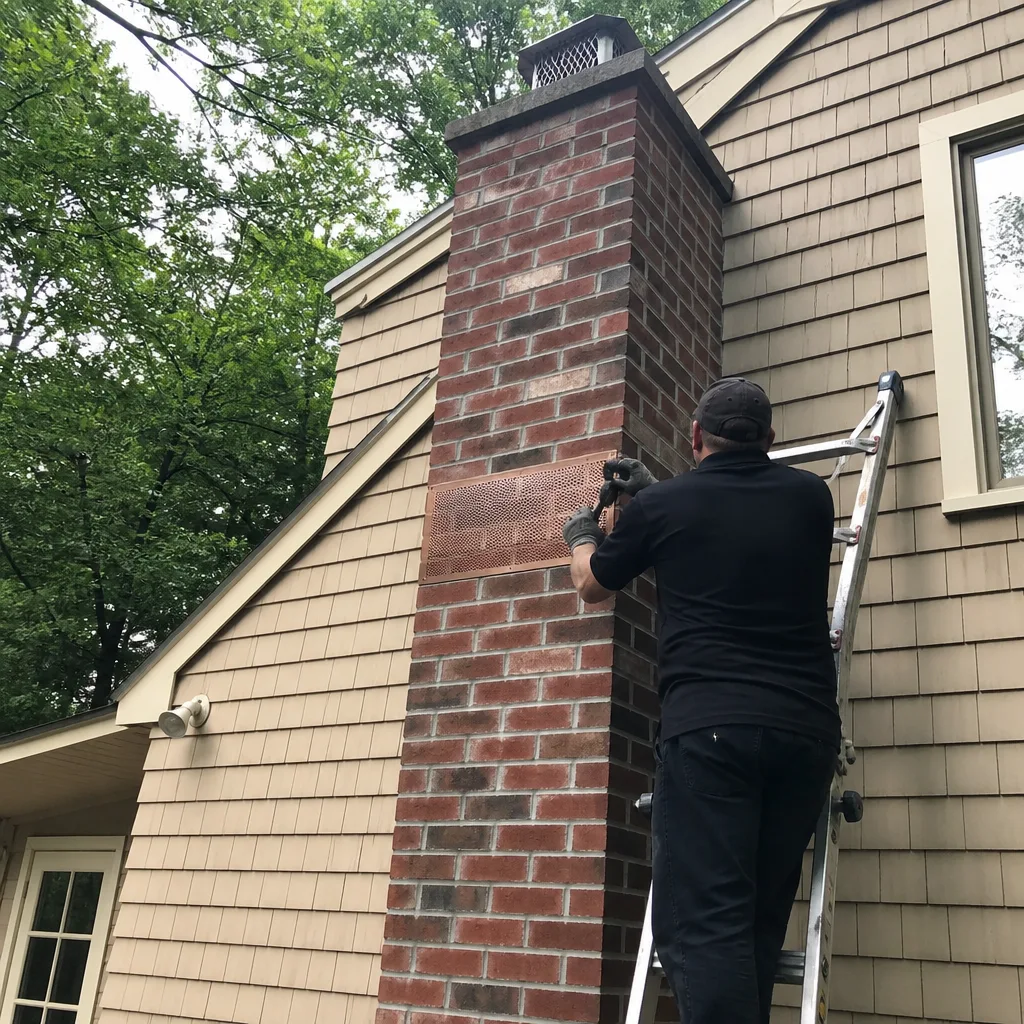 After
After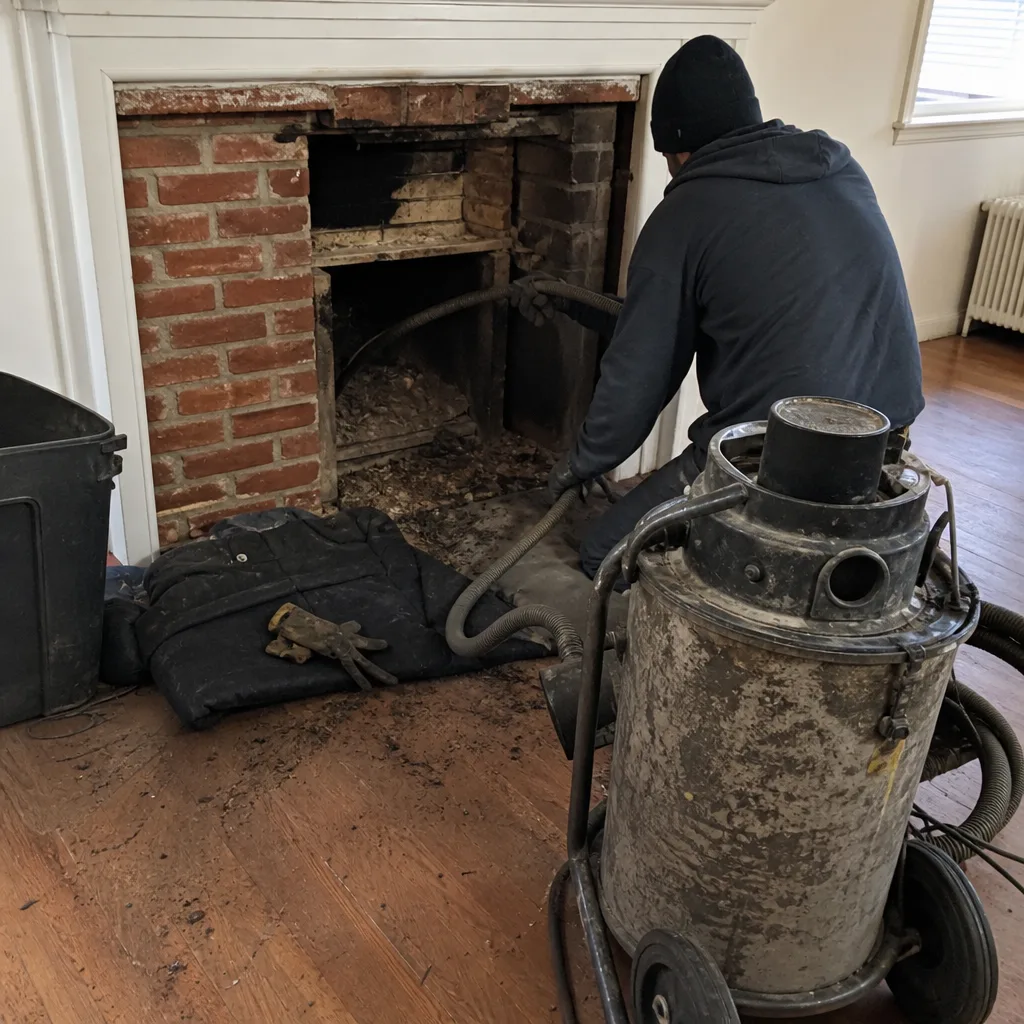 Before
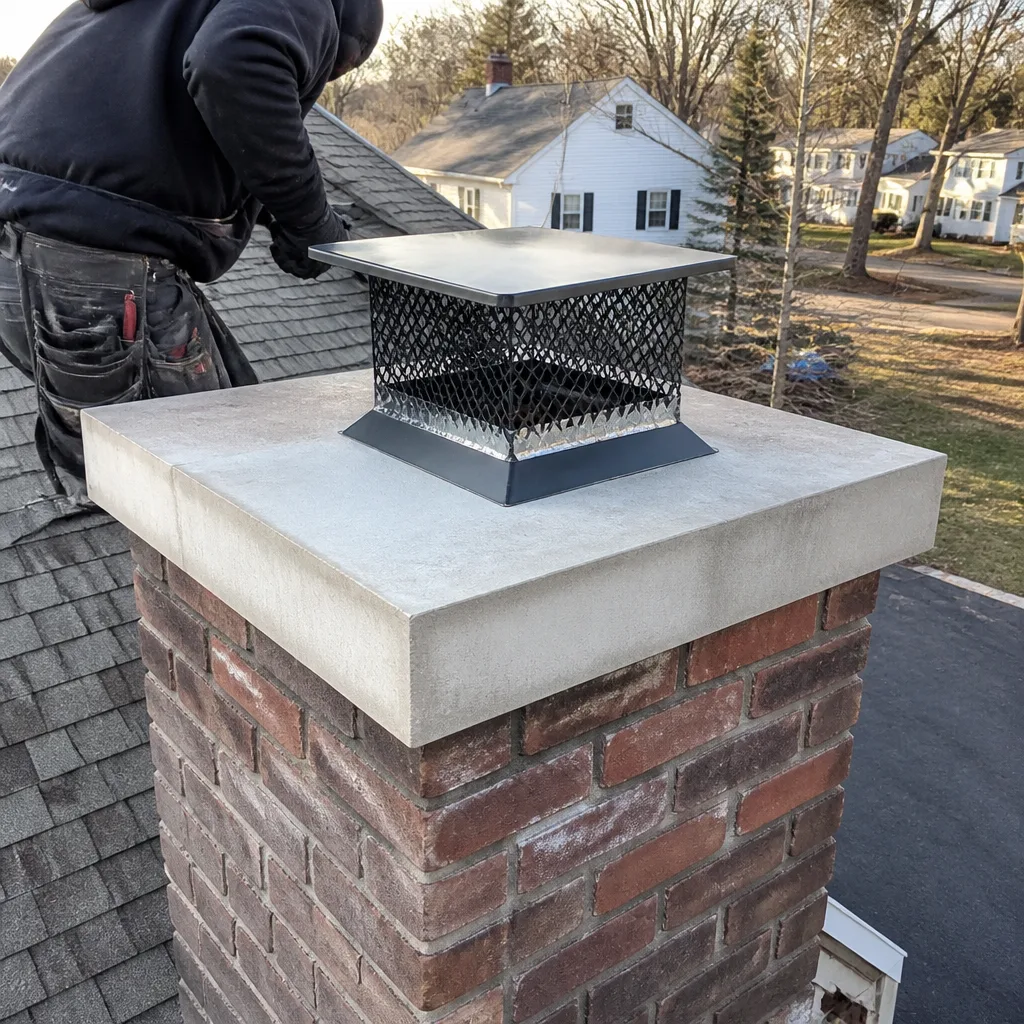 After
AfterChimney Cleaning Permits, Codes & Inspections in MA: What You Need to Know
Most Massachusetts homeowners assume chimney cleaning never requires a permit. For a routine annual sweep, they’re right. But the moment a liner is replaced, a cap is structurally modified, or an insert is installed, the job enters permit territory that many contractors quietly skip, leaving the homeowner exposed at resale and during insurance claims. In Woburn, we’ve seen sellers scramble to produce documentation three days before closing, only to learn the liner replacement they paid for five years ago was never inspected by the building department. This guide explains exactly where Massachusetts law draws the line between routine maintenance and permitted work, what paperwork to keep, and why it matters when you need it most - and for the complete guide to chimney cleaning in Woburn, see our dedicated resource.
Quick Answer
Routine chimney sweeping and cleaning in Massachusetts do not require a building permit. However, any work that alters the chimney structure, replaces a liner, installs or modifies a fireplace insert, or changes venting configuration triggers permit requirements under 780 CMR, the Massachusetts State Building Code. Homeowners should request a permit number before work begins, verify inspection sign-off, and retain all documentation for insurance claims and property sales.
Table of Contents
- Routine Maintenance vs. Permitted Work: Where Massachusetts Draws the Line
- How NFPA 211 Intersects with Massachusetts Building Codes
- Level 2 Chimney Inspections: What NFPA 211 Requires and Why Massachusetts Real Estate Attorneys Demand Them
- Woburn Building Department, Fire Marshal, and Code Enforcement: Who Has Jurisdiction
- The Paper Trail Homeowners Must Keep After Permitted Chimney Work
- How Unpermitted Work Voids Insurance Coverage and Complicates Resale
- Common Mistakes to Avoid
- When to Call a Professional
- Frequently Asked Questions
Routine Maintenance vs. Permitted Work: Where Massachusetts Draws the Line
The Massachusetts State Building Code, 780 CMR, governs all construction and alteration of building components. The critical distinction for chimney work lies in whether the activity constitutes “repair and maintenance” or “alteration, repair, or addition” to a structural or mechanical system.
Routine maintenance that does NOT require a permit includes:
- Annual chimney sweeping and creosote removal
- Cleaning of firebox, smoke chamber, and flue
- Replacement of a chimney cap with an identical unit (same size, same attachment method)
- Sealing minor crown cracks with appropriate crown sealant products
- Inspection and cleaning of damper assemblies
Work that DOES require a Woburn building permit includes:
- Chimney liner replacement or installation of any type
- Structural modification to the chimney crown, cap, or flashing
- Installation or replacement of a fireplace insert or wood stove
- Changes to venting configuration, including conversion from wood-burning to gas
- Chimney rebuilds, partial or complete
- Tuckpointing or repointing that exceeds 25% of the chimney’s masonry surface
- Installation of exterior chimney chase covers or structural enclosures
The language in 780 CMR 110.R5.1 specifically requires permits for “the installation, alteration, repair, replacement, or relocation of any chimney, vent, or similar conveyance of combustion products.” The Massachusetts amendments to the International Residential Code further clarify that liner replacement constitutes an alteration of the venting system, not maintenance of it.
In our 42 years serving Woburn and surrounding communities, we’ve encountered homeowners who believed their liner replacement was “just cleaning” because the contractor described it that way - one reason we publish chimney cleaning warning signs: a Woburn homeowner’s reference guide to help identify when “cleaning” claims should raise red flags. The contractor may have been avoiding permit fees and inspection scheduling. The homeowner pays the price later.
Woburn’s climate compounds this issue. Freeze-thaw cycles in Middlesex County accelerate liner deterioration. Clay tile liners installed in the 1970s and 1980s, common in Woburn neighborhoods like the Highlands and South End, crack and spall at higher rates than in more temperate zones. When we recommend a stainless steel replacement using DuraFlex or Copperfield components, we’re recommending permitted work. We obtain the permit. We schedule the inspection. We provide the homeowner with signed documentation. Done right, and we stand behind it.
How NFPA 211 Intersects with Massachusetts Building Codes
NFPA 211, the National Fire Protection Association’s Standard for Chimneys, Fireplaces, Vents, and Solid Fuel-Burning Appliances, serves as the referenced standard within 780 CMR. Massachusetts has adopted the 2018 International Residential Code with state-specific amendments, and NFPA 211-2019 is incorporated by reference for chimney and venting system requirements.
This intersection creates specific obligations that differ from national norms in several ways:
- Liner material specifications: Massachusetts amendments require that chimney liners listed for use in the state meet both NFPA 211 clearance standards and 780 CMR fire-resistance ratings. Not all stainless steel liners sold nationally qualify. We specify DuraFlex and Copperfield products because their listings explicitly include Massachusetts approval.
- Clearance to combustibles: NFPA 211 Section 11.2 establishes minimum clearances. Massachusetts enforces these through local building inspectors who measure during permitted work inspections. In Woburn, inspectors typically verify clearances at the attic penetration and where the chimney passes through interior walls. Older homes in the Montvale area, with balloon framing and minimal fire-blocking, frequently require remediation to meet current standards.
- Factory-built chimney installations: Massachusetts requires that all factory-built chimney systems be installed according to the manufacturer’s instructions and listed for the specific appliance. The state maintains no separate approval process, but building inspectors verify listing marks during inspection. Gelco and Olympia Chimney factory-built components carry the UL listings inspectors recognize.
- Solid fuel appliance connections: NFPA 211 Section 12.6 requires direct connection to a listed liner when venting through a masonry chimney. Massachusetts inspectors enforce this strictly; “slip connectors” or unlined connections that might pass in other jurisdictions fail inspection here.
The practical implication: a contractor working in Woburn cannot simply follow NFPA 211 in isolation. They must anticipate 780 CMR amendments, local inspector preferences, and the specific documentation Massachusetts requires. We’ve developed our protocols through decades of working with Woburn’s building department. Our technicians arrive at inspections with code sections marked, manufacturer’s listings printed, and photo documentation of every clearance measurement. Photos you can see, a plain-English verdict.
Level 2 Chimney Inspections: What NFPA 211 Requires and Why Massachusetts Real Estate Attorneys Demand Them
NFPA 211 defines three levels of chimney inspection. Level 1 is the annual visual inspection performed during routine sweeping. Level 3 involves demolition of building components to access concealed areas. Level 2 occupies the critical middle ground, and its requirements are specific, extensive, and increasingly non-negotiable in Massachusetts real estate transactions.
NFPA 211 Section 15.2.2 mandates a Level 2 inspection:
- Upon sale or transfer of a property
- Upon change of appliance fuel type
- Upon change of appliance efficiency or input rating
- After a chimney fire or building fire
- After weather events or seismic occurrence
- When additions or changes are made to the system
A Level 2 inspection requires internal evaluation of all flue surfaces and all accessible portions of the chimney exterior and interior. This means camera inspection of the flue, attic inspection of the chimney structure, and accessible basement or crawl space examination of the foundation and cleanout.
In Massachusetts, real estate attorneys have increasingly standardized Level 2 inspection requirements in purchase and sale agreements. The Massachusetts Association of Realtors purchase agreement includes optional chimney inspection contingencies, and attorneys in Middlesex County frequently make them mandatory. The reason is liability: a seller who fails to disclose a defective chimney system, documented or not, faces potential claims under Massachusetts General Laws Chapter 93A for unfair and deceptive practices.
We’ve performed Level 2 inspections for Woburn home sales in every neighborhood, from new construction near Commerce Drive to the pre-war capes off Main Street. The findings determine transaction timelines. A cracked flue tile documented in a Level 2 report becomes a negotiation point. An undocumented liner replacement becomes a cloud on title until permits are located or the work is redone and inspected.
Our Level 2 inspections end with photographs the homeowner can see and a plain-English verdict. We document like engineers because that’s what the code requires. We explain like craftsmen because that’s what homeowners deserve. The report includes:
- High-resolution video of the complete flue interior
- Still photographs of all accessible structural components
- Clearance measurements at all critical points
- Condition assessment of crown, cap, flashing, and masonry
- Appliance connection evaluation
- Written verdict with recommended actions prioritized by urgency
Nothing is recommended without camera evidence the homeowner can see for themselves. Some work can safely wait. When it can, we say so. When it cannot, we explain exactly why.
Woburn Building Department, Fire Marshal, and Code Enforcement: Who Has Jurisdiction
Chimney code enforcement in Woburn involves multiple entities with distinct jurisdictions. Understanding which authority applies to your situation prevents costly misdirection and ensures proper compliance.
The Woburn Building Department holds primary jurisdiction over chimney construction, alteration, and repair permits. Located at 10 Common Street, the department issues permits, schedules inspections, and maintains the official record of permitted work. Building inspectors verify compliance with 780 CMR during rough and final inspections. For liner replacements, the inspector typically requires both a mid-point inspection (liner in place, before closure) and a final inspection (appliance connected, system operational).
The Woburn Fire Department, specifically the Fire Prevention Bureau under the Fire Marshal, holds concurrent jurisdiction for fire safety code enforcement under 527 CMR, the Massachusetts Comprehensive Fire Safety Code. The Fire Marshal’s authority extends to:
- Clearance violations that create immediate fire hazards
- Improper installation of solid fuel appliances
- Blocked or obstructed flues in multi-family dwellings
- Post-fire investigation and remediation orders
The practical distinction: the Building Department governs how the chimney is built and altered. The Fire Marshal governs whether the operating system creates immediate danger. A permitted liner installation with proper clearances might still draw Fire Marshal attention if the appliance is operated improperly. Conversely, an unpermitted but technically sound installation might escape Fire Marshal notice until an incident occurs.
In Woburn, the Building Department and Fire Prevention Bureau coordinate through shared permitting software, but their records are not identical. A homeowner should confirm that both agencies have cleared any violations, not just one.
We’ve worked with both departments throughout our 42 years in operation. When we encounter a situation with jurisdictional complexity, we communicate directly with the relevant inspector before work begins. This prevents the scenario no homeowner wants: work completed, then told the wrong authority must review it.
Woburn’s specific enforcement priorities reflect its housing stock. The city has significant vintage construction, particularly in the Central Street and Pleasant Street corridors, where chimneys may date to the 1920s or earlier. Building inspectors in Woburn are particularly attentive to structural integrity of masonry in these properties. Fire Marshal inspections emphasize proper clearances in densely built neighborhoods where adjacent structures create exposure risks.
The Paper Trail Homeowners Must Keep After Permitted Chimney Work
Permitted chimney work generates documentation that serves as proof of compliance for insurance, resale, and warranty purposes. The homeowner who maintains this paper trail avoids the scramble we’ve seen too many times. The homeowner who does not, or who never received it, faces unnecessary expense and delay.
Documents to request and retain:
- Building permit application copy: Confirms the scope of work as officially described. Verify that the description matches what the contractor actually performed. A permit for “chimney repair” does not cover liner replacement unless explicitly stated.
- Permit number and inspection schedule: Woburn issues permit numbers in format WBD-[year]-[sequence]. The permit should be posted at the work site during active construction. Request the inspection schedule to confirm rough and final inspections occurred.
- Signed inspection certificates: The building inspector signs off on each inspection phase. Final sign-off indicates code compliance. This is the document insurers and buyers’ attorneys request.
- Contractor’s itemized invoice: Should reference the permit number, describe materials used (including brand and model), and separate labor from materials. Our invoices specify HeatShield or DuraFlex products by name when applicable.
- Manufacturer’s warranty documents: Liners, caps, and crowns carry manufacturer warranties that require installation by qualified professionals and may require inspection documentation for validity.
- Contractor’s workmanship warranty: Our 90-Day Done Right Promise is provided in writing with no arguing. If it’s not right, we make it right. Other contractors may offer different terms. Get them in writing.
- Photo documentation: Before, during, and after photographs of the work area. We provide these as standard practice. They demonstrate condition prior to work, installation quality, and final appearance.
Where to file these documents:
Keep originals in a fireproof document safe or safe deposit box. Maintain digital copies in cloud storage with backup. Provide copies to your insurance agent for policy file notation. When selling, disclose permitted work proactively with full documentation; this builds buyer confidence and prevents last-minute negotiation.
In Woburn’s competitive real estate market, where homes in desirable neighborhoods like the Country Club area move quickly, incomplete documentation can delay closing. We’ve received calls from sellers whose buyers’ attorneys flagged missing permits two days before scheduled closing. The solution is never quick or cheap. The solution is never needed if the paperwork was maintained from the start.
How Unpermitted Work Voids Insurance Coverage and Complicates Resale
A chimney relining job done without a permit in Massachusetts doesn’t just risk a fine. It can void a homeowner’s insurance coverage for fire damage originating at the chimney, because the modification wasn’t inspected and approved by the local building department.
Massachusetts standard homeowner insurance policies contain provisions that exclude coverage for damage resulting from “faulty, inadequate, or defective construction, renovation, or repair.” Insurers interpret unpermitted work as presumptively defective because it bypassed independent code compliance verification. The homeowner bears the burden of proving the work was sound, a difficult task without inspection records.
The scenario unfolds predictably. A chimney fire occurs. The insurer’s adjuster investigates. They discover the liner was replaced three years prior. They request permit and inspection documentation. The homeowner cannot produce it. The insurer denies the claim, citing the policy exclusion. The homeowner must then sue for coverage, with uncertain outcome and certain legal expense.
We’ve seen this in Woburn and throughout Middlesex County. In one case, a homeowner in the North Woburn area had a HeatShield flue resurfacing performed by an unlicensed contractor who described it as “cleaning and sealing.” No permit was obtained. Two years later, a chimney fire caused $47,000 in damage. The insurer denied coverage. The contractor was unfindable. The homeowner absorbed the loss.
Resale complications follow similar patterns. Massachusetts requires sellers to disclose known defects and material facts affecting property value. Standard disclosure forms ask about “any work performed without required permits.” A seller who checks “no” and is later found to have unpermitted chimney work faces potential Chapter 93A liability for triple damages plus attorney fees.
Buyers’ attorneys in Woburn routinely order municipal lien certificates and building department record searches. These reveal permits issued for the property. A gap between obvious work performed and permits on record triggers inquiry. The seller must then produce documentation, obtain retroactive permits (often requiring exposed inspection), or credit the buyer for estimated remediation.
None of this is theoretical. We receive calls weekly from homeowners, real estate agents, and attorneys seeking documentation for past work. When we performed the work, we have complete records. When we did not, we can only advise on next steps. The cost of proper permitting at the time of work is modest. The cost of remedying its absence is substantial.
Common Mistakes to Avoid
- Accepting a contractor’s claim that “permits aren’t needed for this.” Verify independently with the Woburn Building Department. A brief phone call to (781) 404-3793 confirms permit requirements for your specific scope of work.
- Paying in full before final inspection sign-off. Reputable contractors structure payment with final installment contingent on inspection approval. We require no payment until the homeowner is satisfied and inspections are complete.
- Failing to verify the contractor’s license and insurance. Massachusetts requires home improvement contractor registration for jobs over $500. Request HIC number and verify at mass.gov. Confirm liability insurance and workers compensation coverage.
- Discarding documentation after “the work is done.” Chimney work documentation must be retained for the life of the component plus the statute of limitations for property claims. In Massachusetts, this effectively means forever.
- Assuming a town over has the same requirements. While 780 CMR governs statewide, local amendments and inspector interpretations vary. Woburn’s requirements differ in detail from Burlington, Lexington, or Reading. Work with contractors who know the specific municipality.
- Neglecting to transfer manufacturer warranties after property sale. Some liner warranties are transferable; others are not. Clarify at installation and document transfer procedures for future sale.
- Waiting for a problem to inspect. Annual Level 1 inspections catch deterioration before it requires permitted remediation. The homeowner who sweeps annually spends less over time than the homeowner who waits for visible damage.
When to Call a Professional
Call a qualified chimney professional when any of the following apply: you’re purchasing a home and need a Level 2 inspection for closing; you’ve changed fuel types or installed a new appliance; you’ve experienced a chimney fire or significant weather event; your annual sweep reveals flue damage, liner deterioration, or clearance concerns; or you’re planning to sell and need to verify documentation of past work. Our Chimney Cleaning & Sweep Maintenance Checklist for Woburn Homeowners covers each scenario in detail.
In Woburn, Hearthstone Chimney Co. provides Level 2 camera inspections that end with photos you can see and a plain-English verdict. We obtain permits when work requires them. We stand behind every job with our 90-Day Done Right Promise, in writing, no arguing. A square deal: no surprises on the bill. We’ll be there when we say.
Call (781) 404-3793 for a free estimate. A live person answers every call, 24 hours a day, 7 days a week.
Frequently Asked Questions
No. Annual chimney sweeping, creosote removal, and basic cleaning of accessible components are considered routine maintenance under 780 CMR and do not require a building permit in Woburn or any Massachusetts municipality. For more guides & resources on what does and doesn’t require permitting, browse our blog. Call (781) 404-3793 to schedule a sweep - estimates are free.
A stainless steel liner replacement in the Woburn market typically ranges from $2,800 to $5,500 depending on flue diameter, number of appliance connections, accessibility, and whether the chimney requires structural repair before relining. The permit fee from Woburn Building Department is additional, usually $75-$150. We provide no-hassle upfront pricing - the number on the estimate is the number on the invoice. Call (781) 404-3793 for an exact quote.
You have several options, ordered by increasing cost and completeness. First, contact the Woburn Building Department to determine whether any permit was issued that the seller failed to disclose. Second, if no permit exists, request a retroactive permit, which typically requires exposing the work for inspector verification. Third, if the work cannot be verified or fails inspection, complete replacement with proper permitting may be necessary. We evaluate these situations regularly and can advise on the most practical path. Documentation from our Level 2 inspection helps determine which path applies.
NFPA 211 recommends annual inspection and sweeping as needed. In Woburn’s climate, with cold winters and significant freeze-thaw cycling, we recommend annual sweeping for all wood-burning systems and inspection of gas systems every two years. Heavy use, such as primary heating with wood or pellet appliances, may require mid-season sweeping. The specific interval depends on fuel type, burn habits, and system condition documented during inspection.
The answer depends on condition, documented by camera inspection. Clay tile flues with isolated cracks may qualify for HeatShield resurfacing, a permitted repair that restores a smooth, sealed surface. Widespread deterioration, missing tiles, or improper sizing for the connected appliance typically requires stainless steel liner replacement using DuraFlex or Copperfield components. We never recommend replacement without camera evidence you can see, and we plainly state when repair can safely wait or when resurfacing is sufficient.
Neglected chimneys accumulate creosote, a combustible byproduct of wood burning that ignites at approximately 451°F. Chimney fires damage liners, crack masonry, and can extend to structural components. Blocked or deteriorated flues also vent carbon monoxide into living spaces, a risk that increases with age of system and absence of inspection. These are not theoretical hazards; Woburn Fire Department responds to chimney fires annually, particularly in early burning season when homeowners light first fires without inspection. Annual maintenance costs substantially less than emergency response, repair, or health consequences. Call (781) 404-3793 to schedule before burning season.
The Bottom Line
Massachusetts chimney regulations distinguish sharply between routine maintenance and work requiring permits. The homeowner who understands this distinction, verifies contractor compliance, and maintains complete documentation protects their property value, insurance coverage, and peace of mind. In Woburn, the Building Department and Fire Marshal enforce these standards with increasing coordination, particularly as real estate transactions standardize Level 2 inspection requirements. The cost of proper permitting is modest. The cost of its absence, measured in denied claims, delayed sales, and repeated work, is not. Work with contractors who obtain permits as standard practice, document every inspection with photographs, and stand behind their work in writing. We’ve operated this way for over 42 years. We plan to for decades more.
Written by Russell Haines, Owner at Hearthstone Chimney Co., serving Woburn since 2014.